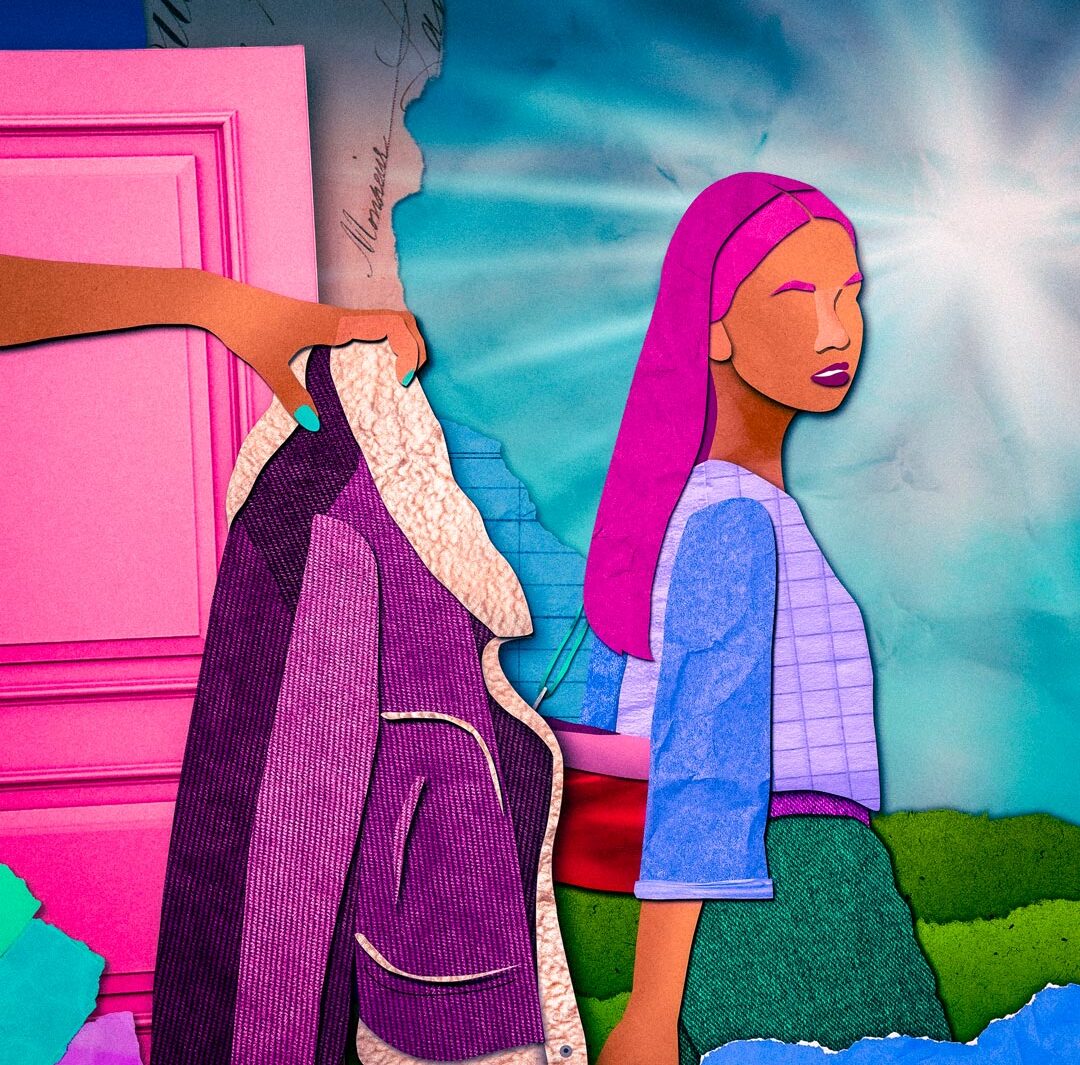

There comes a moment in life when you realize that certain laws of nature… a dozen or two of them, if we’re being precise, simply do not apply inside a Latino household. One of them is the seemingly logical relationship between the temperature outside and the need to bring a jacket. You bring one. Always. No questions asked.
The sun can be shining. The forecast can call for 90 degrees all day. You can explain that you’re going to an outdoor lunch at two in the afternoon. None of this changes the question that will inevitably come just as you’re walking out the door:
“Are you really not taking a jacket?”
The rational answer is no. But your intuition is screaming: Take it. Don’t argue. Just take it.
What’s interesting is that behind this domestic negotiation lies something psychologists have been studying for decades: how we perceive risk. Research by scholars like Paul Slovic shows that people don’t evaluate danger purely by calculating probabilities. There’s also what is known as risk as feelings: our perception of risk is shaped by intuition and by what we imagine might happen.
You see 90 degrees. Your mamá sees possibilities. Dozens of possibilities.
The temperature could drop. It could rain. The restaurant could have the air conditioning set to Arctic levels, did you think about that, mijo? You might end up coming home much later than planned. And, for reasons that remain beyond scientific explanation, there is always the possibility that “they’ll seat you right where there’s a draft.”
The probability of any one of these scenarios matters less than a far more powerful question: But what if?
And here we encounter a logic that is remarkably difficult to defeat. If you bring the jacket and don’t need it, you carry it around for a few hours. If you don’t bring it and get cold, your mother will have to live with the knowledge that this entirely preventable disaster occurred after she specifically warned you about it.
Seen this way, the jacket isn’t clothing. It’s an insurance policy… the cheapest one you’ll ever buy, actually.
But there’s something deeper behind all that insistence. attachment theory, originally developed by John Bowlby, examines how we seek security and closeness through our relationships. Later research also developed the concept of the caregiving system: the behaviors through which a caregiver identifies potential threats and attempts to protect another person.
The only problem is that apparently no one informed this system that children grow up.
You can be seven and heading outside to play. You can be twenty-five and going out for a run. You can be forty and boarding an international flight. Somewhere along the way, you will receive some version of the same question: “But you did bring something to keep you warm, right?”
And while the phenomenon is hardly exclusive to Latinos, research into Latino family dynamics has identified parenting styles in which protection and closeness play a particularly visible role. In a study of first-generation Latino families by Melanie Domenech Rodríguez and her colleagues, for example, researchers identified patterns they described as protective parenting, emphasizing the importance of understanding these behaviors within their cultural context.
Perhaps that’s why the famous jacket belongs to a much broader category of questions that any Latino child recognizes instantly.
“Did you eat?”
“Let me know when you get there.”
“Do you have water?”
“Do you have money?”
They sound like questions about food, transportation, hydration, or finances. In reality, they’re all saying more or less the same thing: I can’t control what happens once you walk out that door, but I can try to make sure you’re prepared… for life itself, really. Pretty deep, right?
And that’s when something that seemed mildly absurd for years begins to take on a different meaning.
Because you probably won’t need the jacket. It will probably end up tied around your waist, forgotten on a chair, uselessly carried around all afternoon, or costing you ten dollars at coat check. And maybe your mom even knows that’s the most likely outcome.
But who cares?
Preparing you for an unlikely danger costs very little when the alternative is imagining you facing it unprepared.
That’s why the temperature was never really the point. The jacket is simply one of the most practical ways maternal love has found to go with you when your mom no longer can.
So yes, it’s 90 degrees outside. It doesn’t matter. Take the jacket anyway.
And give mamá a kiss.