
At every Latino party, there is one phrase that marks the beginning of the end, even though nobody really knows how long that ending is going to last.
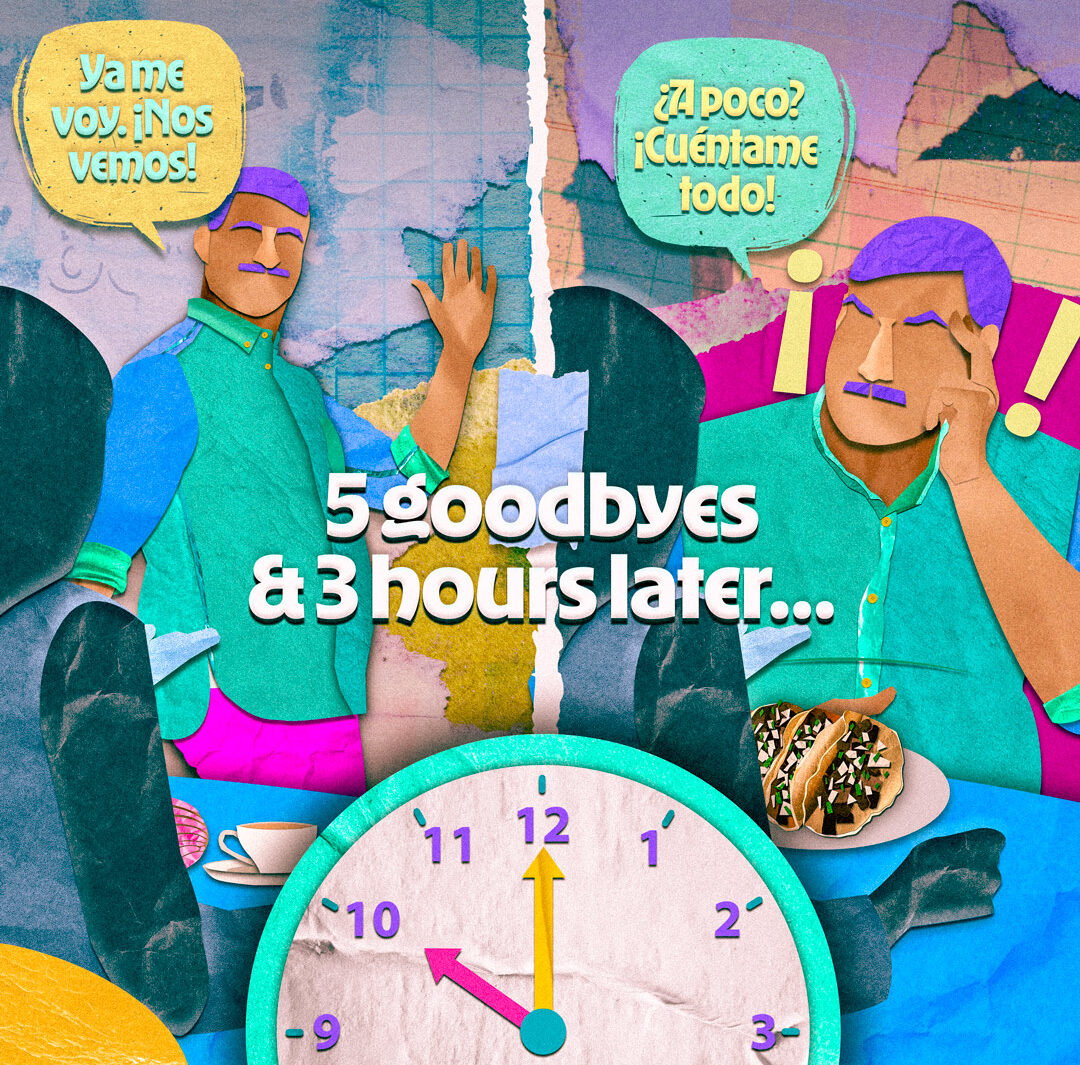
“Well, we should probably get going.”, That’s a lie. Who are you trying to fool? Everybody knows nobody is actually leaving. At least not yet.
That phrase, in reality, means the party has just entered a new stage. A more intimate, more dangerous, and much longer phase: the goodbye.
In other cultures, saying goodbye is fairly linear. You stand up, say thank you, grab your things, and leave. At a Latino party, that is practically rude. Too efficient. If anything, a little suspicious.
Here, leaving requires process.
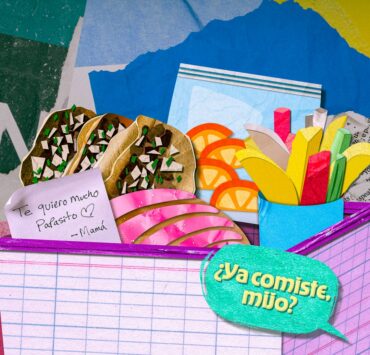
First comes the general announcement, then the individual rounds, then the hugs, then the “see you soon,” then somebody mentions there’s leftover guisado and tells you to wait because they’re packing you some to take home.
And just like that, everything starts over again. The Latino goodbye is not an exit. It is a ritual.
Victor Turner talked about communitas: a bond that forms when normal hierarchies loosen and people enter a kind of shared connection. A space where it no longer matters who you are outside, what deadlines are waiting for you, or whether you have work early the next morning.
At that moment, you are simply someone standing by the door trying to leave for the past twenty-five minutes.
And somehow, in that exact moment, you belong more than ever.
Because there is something special about the goodbye. The music has probably gotten quieter. Someone has started collecting cups. The kids are asleep in medically questionable positions. An uncle is telling an incredibly long story from three or four decades ago near the entrance.
And everyone probably knows the party is already over.
But nobody wants to be the first one to admit it.
That is where the purest form of communitas appears: in the hallway, on the sidewalk, next to the car, with the door open and the engine off. There are no longer hosts or guests. No more formality. Just people suspended in that strange moment where leaving feels logical, but staying five more minutes feels necessary.
Five minutes, of course, is an entirely symbolic unit of time. It can mean five minutes. It can mean half an hour. Or it can mean somebody is about to pull out tortillas to “heat something up real quick.” But that is a different Hisplaining.
And at that point, the person who was supposedly leaving has already lost.
Not that anyone experiences it as defeat. Because deep down, everybody understands something: saying goodbye is hard when a place feels like home.
The goodbye drags on not because we are disorganized, although that is certainly part of it. It drags on because the party created something that did not exist before it started. A temporary little community. A space where people ate, danced, gossiped, silently forgave something, and confirmed that we are still here, together.
That is why nobody wants to end it abruptly. Because leaving is not just leaving. It is breaking the spell.
And maybe that is why the best conversations happen when somebody is already playing with their keys in their hand. When the body is ready to leave, but the heart is still negotiating. That is where the confessions come out, the advice, the “drive safe,” the “it was so good seeing you,” the “text me when you get home.”
The party ends, but the communitas resists. And the goodbye keeps it alive for a few more minutes.
That is why the Latino Goodbye is not bad time management. It is affection with closure issues. A way of saying: I really do have to leave, but I am not ready to stop being with you yet.
And that is why, when somebody at a Latino party says, “Alright, now we’re really leaving,” everybody understands exactly what that means:
There is still a long way to go.