

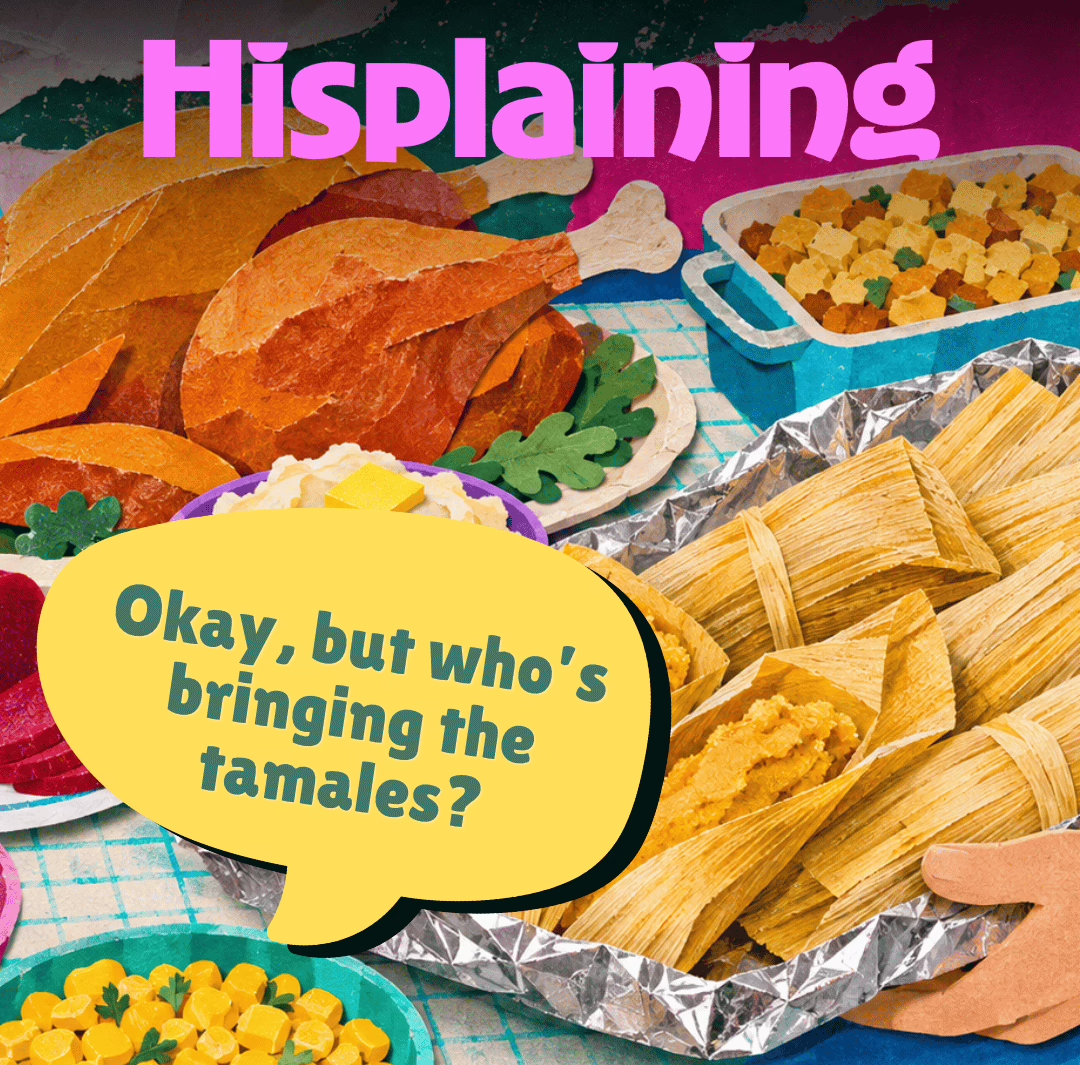

“Let’s do a traditional Thanksgiving this year,” someone says.
Everyone’s on board. Your cousins have already signed up for mashed potatoes, Mom’s already bought the turkey, and your tía has been sitting quietly, with the composure of someone who can see what the rest of you can’t. Finally, she breaks her silence to ask a perfectly reasonable question.
“Okay, but who’s bringing the tamales?”
There’s a pause. You thought “traditional” meant turkey, mashed potatoes, and the kind of cranberry sauce that, if you get it out of the can in one piece, still has the ridges. Your tía was thinking the exact same thing. Plus tamales, obviously. What did you mean by traditional?
The matter is quickly settled with a line of rare poetry. “Why don’t we all just bring a little of everything?”
“A little,” in this case, means enough food to feed the entire neighborhood.
Anthropologist Tamara Kohn studied how families adapt Thanksgiving dishes. The good news for anyone who came hungry is that there are two things going on at once. Cooking what people expect on Thanksgiving makes you feel part of a holiday everyone’s celebrating. Cooking it the way you do back home makes it feel like your family’s holiday, too. Even when “back home” is 2,500 miles away.
From the kitchen, this all seems pretty straightforward. You already know how to make a marinade everybody likes. Why would you skip it on the one day everybody’s coming over?
In one Salvadoran household in Los Angeles, the sisters split the work and make two turkeys. One is roasted American-style. The other is cooked in sauce for panes con chumpe, the turkey sandwiches you’ll find on Christmas Eve in El Salvador. In some Cuban American homes in Miami, the turkey gets seasoned with mojo and even goes into the same caja china they use to roast the lechón. They already had the roasting box. The turkey was the new part.
In Avondale, Arizona, a woman from a Mexican family grew up having turkey for Thanksgiving. When she had her son, she started serving tamales. For her, that was a change to the menu. As far as her son is concerned, that’s what you eat on Thanksgiving. If somebody suggests doing it “the way we used to” in a few years, they’ll have to be a little more specific.
And that’s how the table fills up. One year, someone brings a dish because it turned out pretty good. The next year, everybody asks them to bring it again. Then everybody starts asking them to make more because last year they ran out.
Next year, it’s your turn to host. You put the date in the group chat. You’ve bought the turkey. You found the cranberry sauce with the ridges. You’ve got this whole traditional Thanksgiving thing figured out.
Then you open the group chat again.
“Hey, who’s bringing the tamales?”

