
To better support its student base and continue meeting learners where they are, the Valley Initiative for Development and Advancement (VIDA) is weaving technology into its longtime wraparound model. VIDA is integrating new tech like virtual coaching, smarter online applications, and social platforms to reach more students and make non-coursework–related tasks as easy as possible.
A Human Approach, Expanded by New Tech
Counselors, the heart of VIDA’s model, are tasked with meeting with students regularly in one‑on‑one and group settings, most often face-to-face. Virtual meetings are used when a student’s schedule, work, or family responsibilities make it hard to come in, and VIDA is now planning for a future where that flexibility is built in from day one.
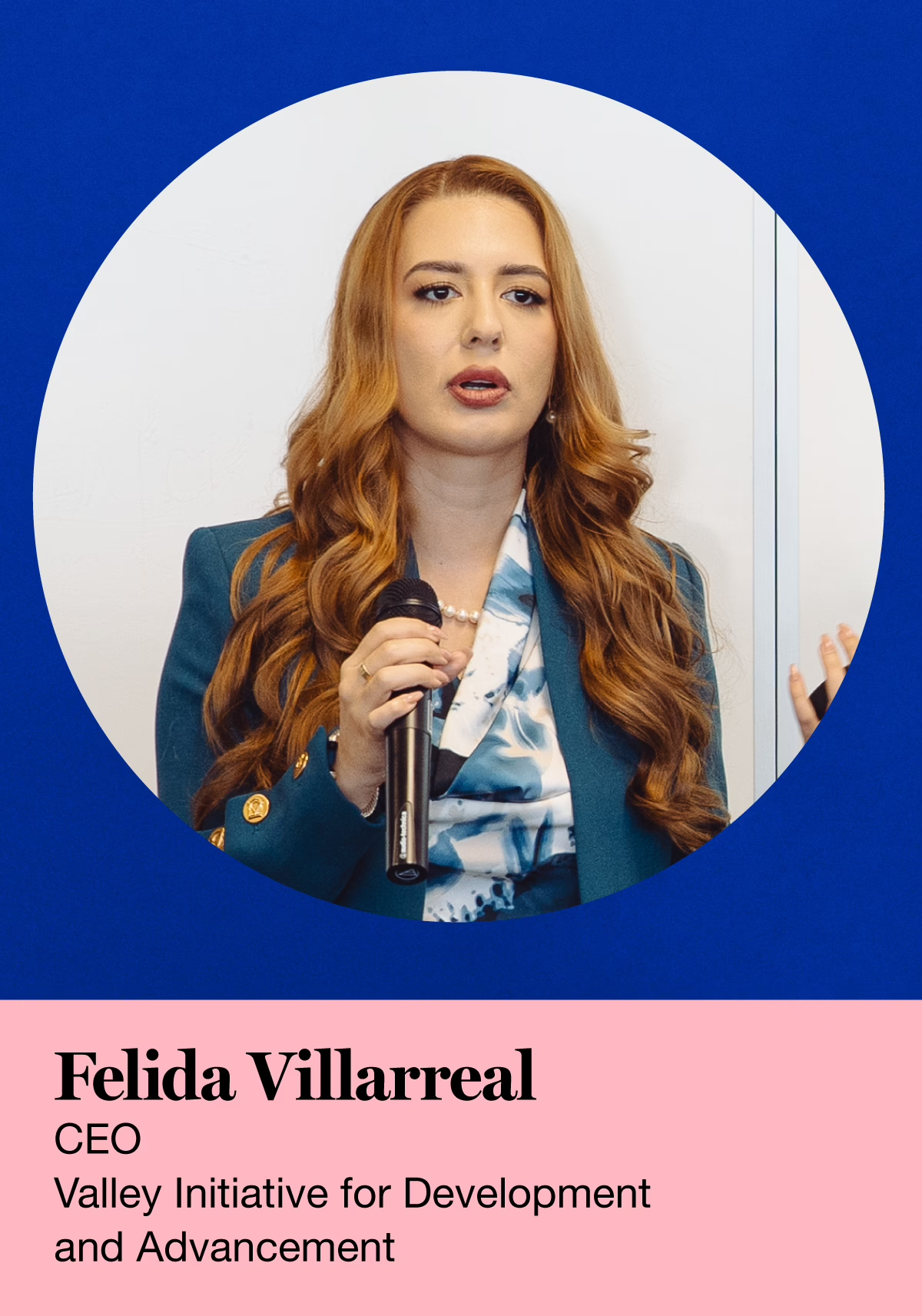
“Over time, being able to coach students virtually becomes a way to grow our capacity,” says president and CEO Felida Villarreal. “It lets us stay close to students no matter where they live or what their work schedule looks like.”
That shift matters in a South Texas region where many adults are juggling full‑time coursework with jobs, parenting, and long drives between cities. VIDA already backs them with full‑time enrollment, intensive counseling, and help with tuition, books, transportation, and childcare. Technology is the next tool to make those supports go further.
“Our challenge is to grow without losing the individualized support that makes VIDA different,” Villarreal says. “Any technology we adopt has to strengthen those relationships, not replace them.”
Bringing Coaching Online
To move more advising online, VIDA is leaning on organizations that have already learned how to do this well. Villarreal points to College Possible, a national nonprofit that supports thousands of students around the country through virtual coaching. VIDA staff have visited with the organization multiple times and are exploring a formal partnership so they can learn the fundamentals of shifting more of their own coaching to a virtual format.
“There’s no need to reinvent the wheel,” Villarreal says. “We want to learn from people who have already walked this road and then adapt it to the Rio Grande Valley.”
For VIDA, online coaching is meant to add touchpoints. It creates more chances to check in before big moments like registration, exams, or clinical placements, and it fits into a broader statewide effort to use text messages and chat tools to keep low‑income and first‑generation students on track. This complements small caseloads, mandatory advising, and hands‑on support, which independent evaluations have highlighted as VIDA’s strengths.
Smarter Online Applications and Learning
Behind the scenes, VIDA is also reworking how students first connect with the program. VIDA’s application is already fully online, but Villarreal and her team are testing ways to make it feel more like a conversation than a form. “We’re exploring tools that can walk applicants through each step, respond to questions as they come up, and even send reminders like, ‘You’re halfway done—do you need help with the rest?’” she says.
That approach fits how VIDA designs its programs overall. Staff begin with the realities of participants’ lives (transportation, childcare, mental health, work schedules) and then build the program around those needs instead of asking students to fit into a rigid mold. As VIDA adds more programs tied to emerging fields like information technology and data‑related roles, it is making sure digital skills are part of the curriculum while keeping its core supports in place.
A Digital Neighborhood for Students and Alumni
Technology is also changing how VIDA stays connected with current and former students. The organization has built a strong presence on Facebook, Instagram, TikTok, and other platforms to share student stories, celebrate graduations, and post resources.
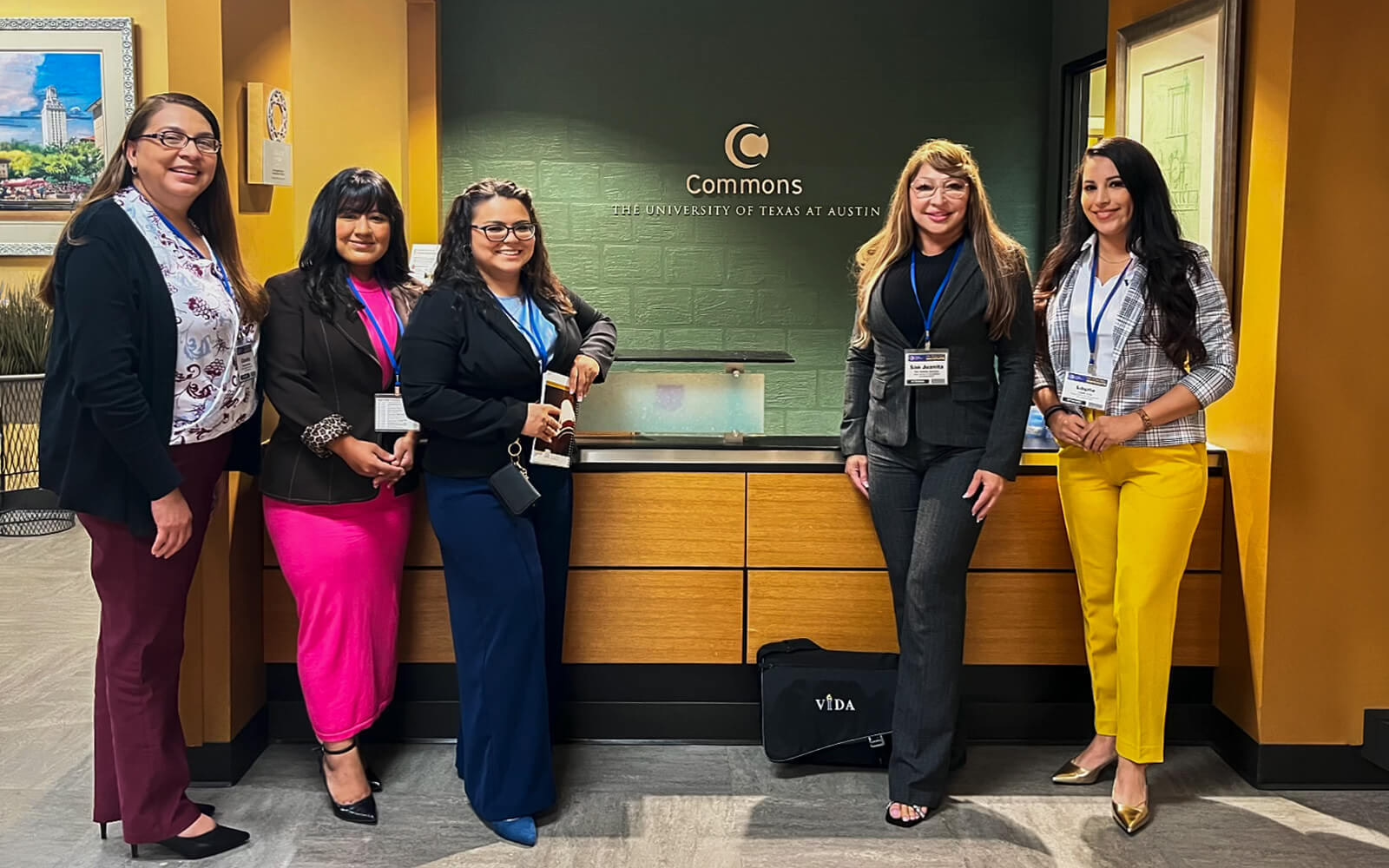
Those channels give VIDA a way to stay in students’ lives even after they’ve completed their programs and moved into full‑time work. It’s one reason national groups like Excelencia in Education and UnidosUS have recognized VIDA for building paths that not only lead to credentials but also open the door to family‑sustaining careers for Latino and low‑income students in the Rio Grande Valley.
Innovation with a Community Lens
For Villarreal, trying new tech is part of her role as a leader of a lean nonprofit in a region with deep need. With a background in public accounting and years as a CPA, she views innovation through both a mission lens and a business one.
“When you’re leading a nonprofit, you have to be bold about finding new opportunities and open to collaboration,” she says. “On our own, our capacity is limited. With strong partners and the right tools, we can stretch our resources and bring more value to every project we pursue.”