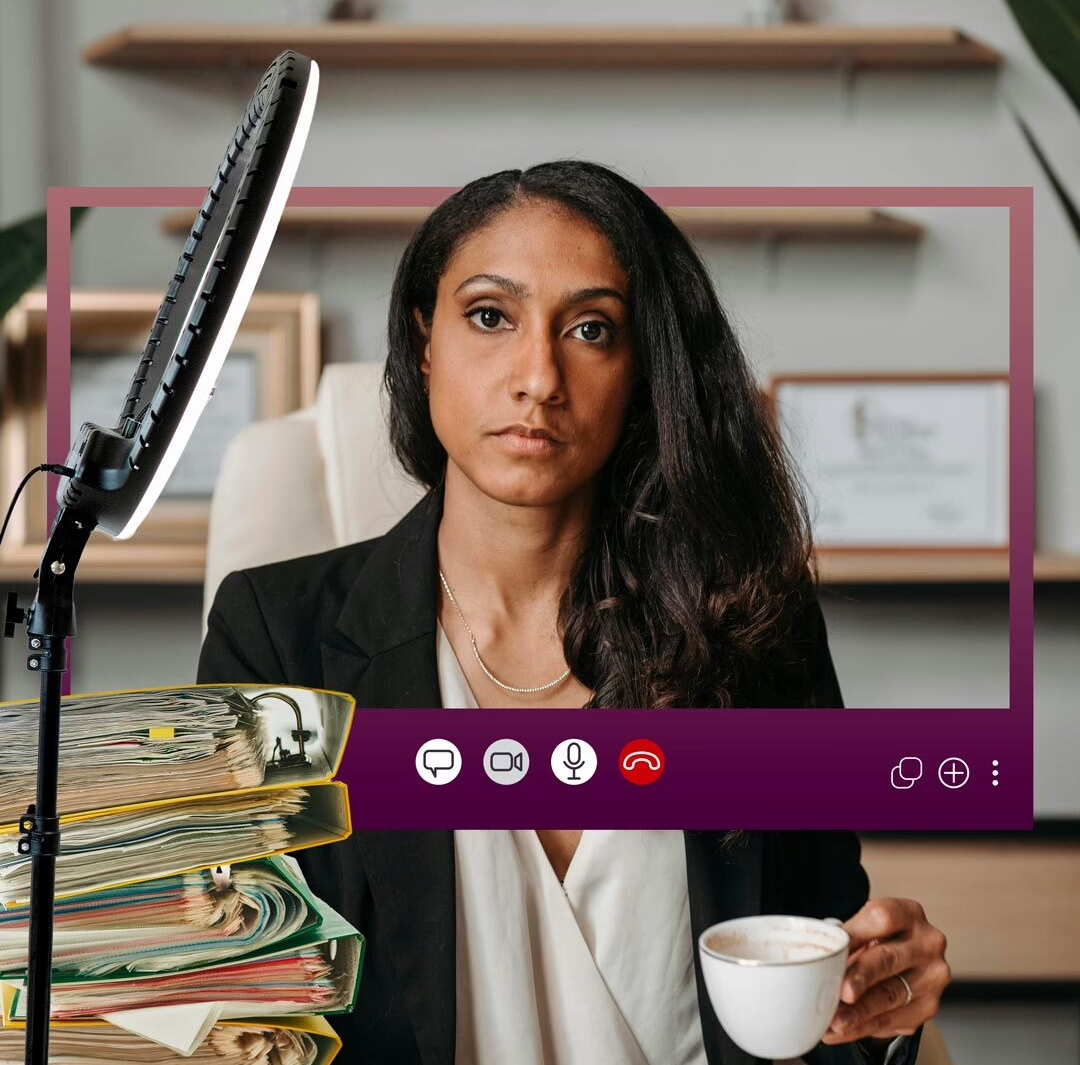

Hispanic Executive published Executive Presence on Camera: The New Leadership Skill Companies Can’t Ignore, exploring how the camera has become central to how leadership is evaluated, communicated, and trusted. The piece made the case that executive presence is no longer just interpersonal — it is mediated through technology.
Cami Padilla read it. And she had something to add.
Cami Padilla is the founder of VODIUM and the creator behind Cami on Camera, where she coaches executives, founders, and leaders on communication and on-camera confidence in a video-first world. With a background in broadcast journalism and political communications, she has spent the past six years helping Fortune 500 executives translate their leadership presence through a screen. Her work focuses on the intersection of executive presence, digital communication, and the evolving role of video in the AI era.
“This is not about becoming an influencer,” she says. “This is about adapting your leadership to a video-first world.”
Padilla knows that world well. With a background in broadcast journalism and political communications, she has spent the past six years coaching Fortune 500 executives on how to show up confidently on camera. What she has found is consistent: most leaders already know how to command a room in person. The moment you put them behind a laptop camera, everything changes.
Here are five things she says executives can do immediately.
1. Raise your camera to eye level.
Camera position is the most overlooked variable in executive video presence. A camera below the chin communicates weakness. A camera at eye level communicates authority and connection — the virtual equivalent of a handshake. “When you meet someone you’re trying to influence, you make eye contact,” Padilla says. “This is the virtual equivalent.”
2. Fix your lighting.
Natural light in front of you is ideal. If that is not available, a simple ring light facing your face will do. The goal is visibility. “You need people to see those beautiful eyes of yours,” Padilla says, “because eye contact builds trust.” Light behind you works against you every time.
3. Stop staring at yourself — look at the lens.
The small camera at the top of your laptop is your audience, not your thumbnail. Padilla recommends positioning your video thumbnail directly beneath the camera when possible, so your eye line naturally meets the lens. Tools like VODIUM, Prompt Smart, and Riverside.fm are designed to help executives stay close to the camera while speaking naturally.
4. Treat your audio as a credibility signal.
“Companies will spend thousands on branding and then use terrible laptop audio,” Padilla says. A headphone and microphone setup — even Bluetooth headphones — instantly improves how present and credible a leader sounds. Audio is not a technical detail. It is a trust signal.
5. Stop asking “How do I look?” Start asking “How can I be useful?”
This is the mindset shift Padilla considers most important. When the camera becomes the audience and the question becomes usefulness rather than appearance, confidence follows naturally. “The future of leadership is not just who can speak in a boardroom,” she says. “It’s who can communicate trust, clarity, and expertise through a screen.”
The stakes are real. LinkedIn is becoming a content platform. When someone searches your name, what comes up? The executives who learn to show up on camera now, Padilla argues, are the ones who will remain relevant in the AI era.