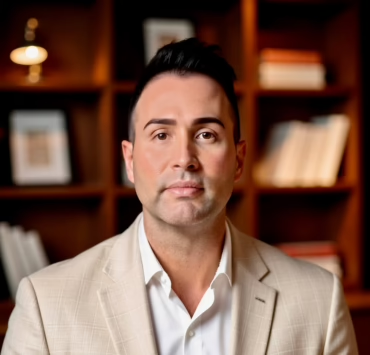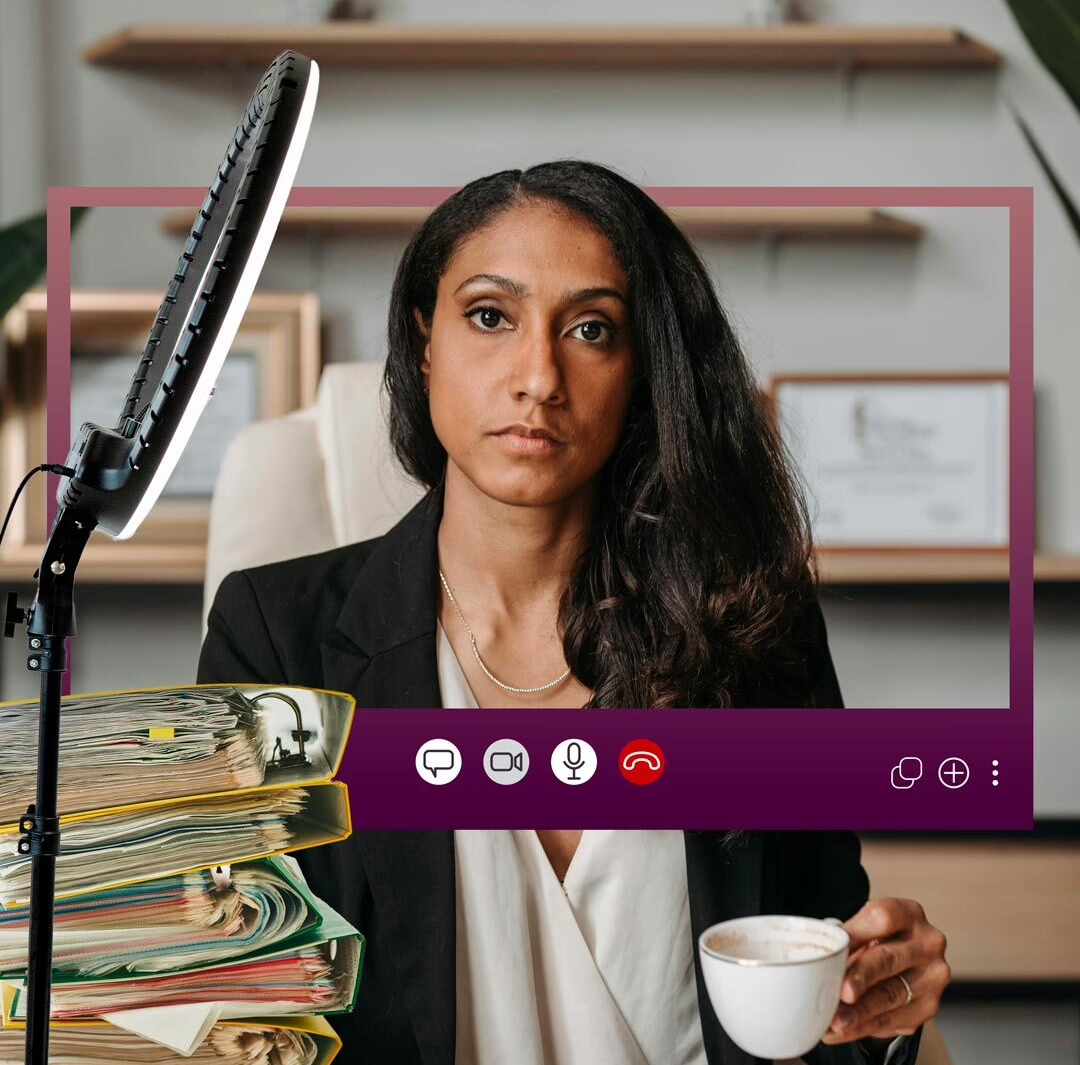

For years, executive presence was largely associated with physical rooms. How a leader walked into a meeting. How they spoke onstage. How they commanded attention during a presentation. Today, much of that presence is being evaluated through a camera lens instead.
From internal town halls and earnings updates to LinkedIn videos and hybrid meetings, executives are now expected to communicate consistently on video, often across multiple audiences in the same week. What started as a remote-work necessity has evolved into a permanent shift in leadership communication.
The Workplace Has Become Video-First
The rise of hybrid work permanently changed how organizations communicate. Even as many companies push for more in-office collaboration, video remains central to daily operations.
Harvard Business Review has repeatedly noted that video communication is now embedded into everything from brainstorming sessions to major announcements, while LinkedIn reports strong year-over-year growth in executive video content on the platform.
The shift is not only external. Internally, leaders are increasingly using short video updates, asynchronous communication, and direct-to-camera messaging to maintain visibility across distributed teams.
The implication is clear: leadership now happens in environments where body language, framing, tone, eye contact, and delivery are constantly visible.
Why Authenticity Is Replacing Corporate Polish
One of the biggest changes shaping executive communication is the decline of overly scripted corporate delivery.
The Financial Times recently reported that more CEOs are embracing informal, unscripted videos to communicate directly with employees, investors, and customers. LinkedIn itself has seen a sharp increase in CEO posting activity over the past two years, driven largely by video-first engagement.
Research around workplace trust increasingly points toward authenticity as a critical factor in communication effectiveness. LinkedIn’s own workplace content trends consistently emphasize that employees and audiences respond more positively to leaders who appear direct, human, and emotionally present rather than heavily rehearsed.
That does not mean executives are becoming casual influencers. It means the visual language of authority is evolving.
In practice, this often looks less like broadcasting and more like conversation.
Executive Presence Is Now a Technical Skill
Video-first leadership also introduces a reality that many executives were never trained for: communication quality is now partially technical.
Lighting, audio clarity, camera framing, pacing, and eye-line all influence perception. Harvard Business Review’s guidance on virtual presence emphasizes that poor visual communication can weaken authority, attention, and trust, even when the underlying message is strong.
That has created a growing market for executive media coaching, presentation consulting, and internal communications training specifically focused on camera presence.
The challenge is especially visible among senior leaders who built their careers in primarily in-person environments. Research into remote-first workplaces has shown that managers and seasoned professionals often face greater difficulty adapting to communication systems where trust and credibility must be built digitally rather than physically.
In other words, executive presence is no longer just interpersonal. It is mediated through technology.
The AI Question Is Already Here
As video communication becomes more central to leadership, artificial intelligence is beginning to reshape it as well.
Executives are increasingly experimenting with AI-generated avatars, voice clones, automated video translation, and digital replicas of themselves. Axios recently reported that leaders including Reid Hoffman and Zoom CEO Eric Yuan are already using AI-driven executive clones to scale communication and accessibility.
But there is tension.
Emerging academic research suggests that AI-mediated video communication can reduce interpersonal trust and confidence, even when factual accuracy remains unchanged. The more artificial the communication appears, the more audiences begin to question authenticity.
The Bottom Line
Executive presence has always been tied to communication. What has changed is the medium.
In a video-first workplace, leaders are no longer evaluated only by what they say, but by how they appear, respond, frame ideas, and create connection through a screen.
The executives adapting best are not trying to become performers. They are learning how to translate credibility, clarity, and trust into environments where the camera is now part of leadership itself.