

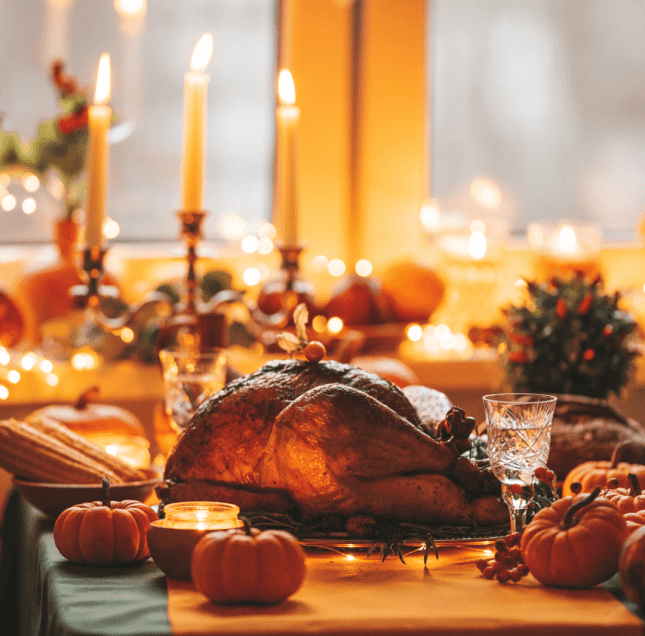

The turkey Americans carve on Thanksgiving has roots that go back well before the holiday. The U.S. Department of Agriculture traces today’s commercial bird to a wild subspecies from Mexico.
The Mexican Origins of the Turkey
In Mexico, the bird is known as the guajolote, from the Nahuatl huexólotl. Indigenous communities in central Mexico were raising domestic turkeys long before Europeans arrived. Researchers have identified remains they interpret as domesticated birds dating back roughly 3,000 years. An independent domestication also took place in what’s now the U.S. Southwest. In Mexican kitchens, the guajolote has a life well beyond holiday dinner. In Puebla, it’s served with mole. In the Yucatán, it goes into dishes like relleno negro, whose dark sauce gets its color from charred chiles.
How the Turkey Crossed the Atlantic Twice
In the 1500s, the Spanish brought domesticated turkeys to Europe, where the birds spread and were bred. English settlers later brought domestic turkeys to North America. Over time, imported birds were crossed with wild turkeys in what is now the United States. One result was the Bronze turkey, whose descendants dominated commercial production until the Broad Breasted White took over in the 1950s.
The surviving account of the 1621 harvest gathering at Plymouth records that the Wampanoag brought five deer and the English colonists hunted birds. It leaves the species of those birds unnamed. By 1827, the roast turkey had a featured spot in a much more detailed account of Thanksgiving dinner, albeit a fictional one. In her novel Northwood, New England writer and editor Sarah Josepha Hale put it at the head of the table. Hale later used her magazine to campaign for a national Thanksgiving, and in 1863 Abraham Lincoln proclaimed a national day of thanksgiving.
Mexico Is the Biggest Market for U.S. Turkey Exports
The turkey trade between the two countries now runs mostly south. Nearly 80 percent of U.S. turkey exports by weight went to Mexico in the first seven months of 2026, according to the USDA. Much of that trade consists of fresh or chilled cuts headed for further processing. Five centuries after Mexico sent domesticated turkeys across the Atlantic, it’s the biggest customer for turkey from the United States.

