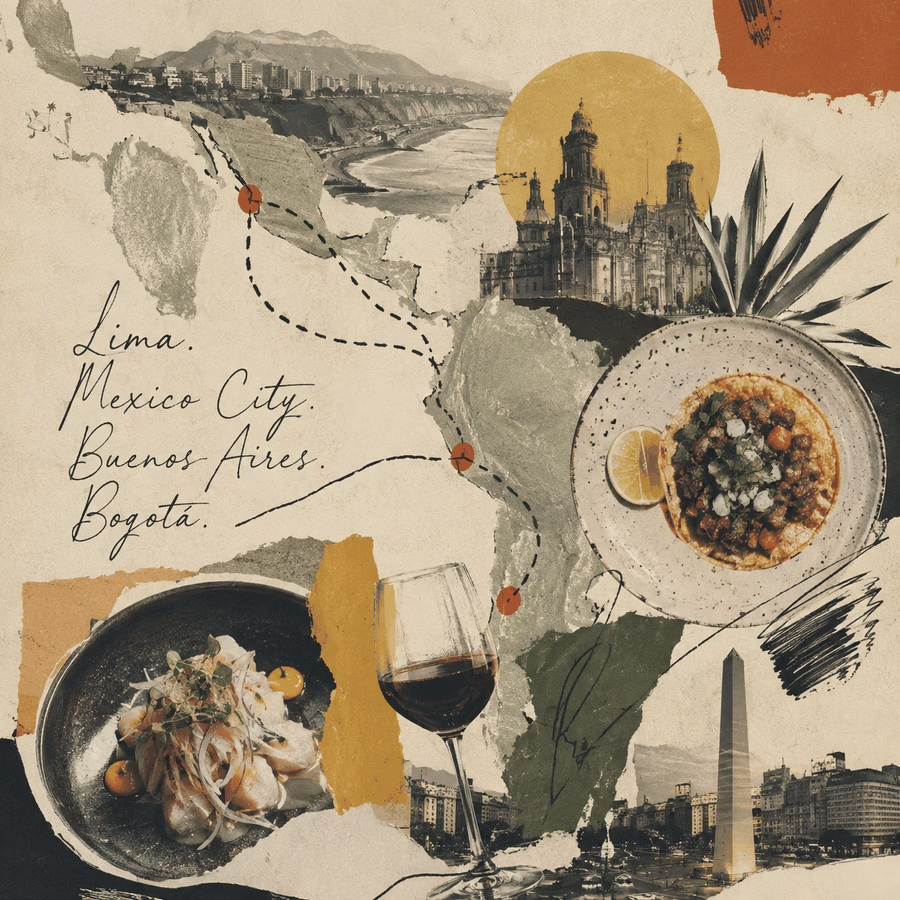

Traveling for food has become increasingly synonymous with chasing reservations. But a great culinary city is not simply one with famous restaurants. It is one where eating becomes a way of reading the place.
Latin America offers particularly compelling examples. The region placed nine restaurants in the top 30 of The World’s 50 Best Restaurants in 2025, including three in the global top ten. Yet the more interesting story exists beyond rankings. For serious culinary travelers, these cities reward curiosity at every level, from neighborhood institutions to contemporary dining rooms.
Lima: Where Migration Became a Cuisine
Few cities demonstrate the relationship between migration and food as clearly as Lima.
Peruvian cooking developed through Indigenous traditions and centuries of Spanish, African, Chinese, and Japanese influence. Nikkei cuisine, born from Japanese immigration to Peru, has become one of the country’s most recognizable culinary exports.
Its global influence is now difficult to ignore. Maido, Mitsuharu Tsumura’s exploration of Japanese-Peruvian cooking, was named the world’s No. 1 restaurant in 2025. Kjolle ranked No. 9 and Mérito No. 26, while Central entered the ranking’s “Best of the Best” hall of fame after taking No. 1 in 2023.
But Lima shouldn’t be experienced exclusively through tasting menus. Cevicherías, anticucho stands, chifas, bakeries, and markets reveal the same history at a different scale. The lesson is in moving between them.
Mexico City: A Country at One Table
Mexico City offers a different proposition: it functions almost like a culinary map of Mexico itself.
Internal migration has brought regional traditions into the capital while international communities have added further layers. Lebanese migration helped shape tacos al pastor, for example, while contemporary restaurants continue combining Mexican ingredients with influences from around the world.
The city’s fine-dining credentials are formidable. Quintonil ranked No. 3 globally in 2025, and Michelin’s 2025 Mexico selection included 181 recommended restaurants nationally, with Pujol and Quintonil retaining two stars.
Still, approaching Mexico City only through prestigious reservations misses the point. Traditional Mexican cuisine is recognized by UNESCO as intangible cultural heritage because it represents an entire cultural system connecting agriculture, ritual, community, ingredients, and technique.
A serious food itinerary should therefore be deliberately democratic: tasting menu one evening, market breakfast the next, followed by tacos eaten standing up.
Buenos Aires: Beyond the Steakhouse
Argentina’s relationship with beef is impossible to separate from Buenos Aires, but treating the city as a steak destination alone undersells it.
The more interesting contemporary story is how cooks are revisiting the institutions and ingredients that define porteño eating.
Don Julio, No. 10 globally in 2025 and No. 3 in Latin America later that year, builds its reputation around Argentine beef, local wine, regenerative farming, and in-house butchery. Meanwhile, El Preferido de Palermo reinterprets the neighborhood bodegón through house-made charcuterie, preserves, and carefully sourced produce.
Buenos Aires rewards travelers who look beyond the parrilla toward bakeries, cafés, pizzerias, vermouth bars, empanadas, and the enduring influence of Italian immigration. What emerges is not one iconic dish but a portrait of the city’s cultural inheritance.
Bogotá: A Culinary Capital Still Being Written
Bogotá may offer the most compelling argument for looking beyond established culinary capitals.
In 2025, El Chato became the first Colombian restaurant to rank No. 1 on Latin America’s 50 Best Restaurants. Chef Álvaro Clavijo’s cooking focuses on Colombian products and relationships with local producers, part of a broader movement bringing greater international attention to the country’s ingredients and regional traditions.
That makes Bogotá particularly interesting now: its global culinary identity feels less codified than those of Lima or Mexico City.
The Bottom Line
The best culinary travel doesn’t produce a checklist of famous restaurants. It produces a better understanding of place.
In Latin America’s most interesting food cities, the essential itinerary moves between celebrated chefs and everyday institutions. Because if you only eat where the awards tell you to eat, you may taste extraordinary food, but miss the culture that made it possible.