
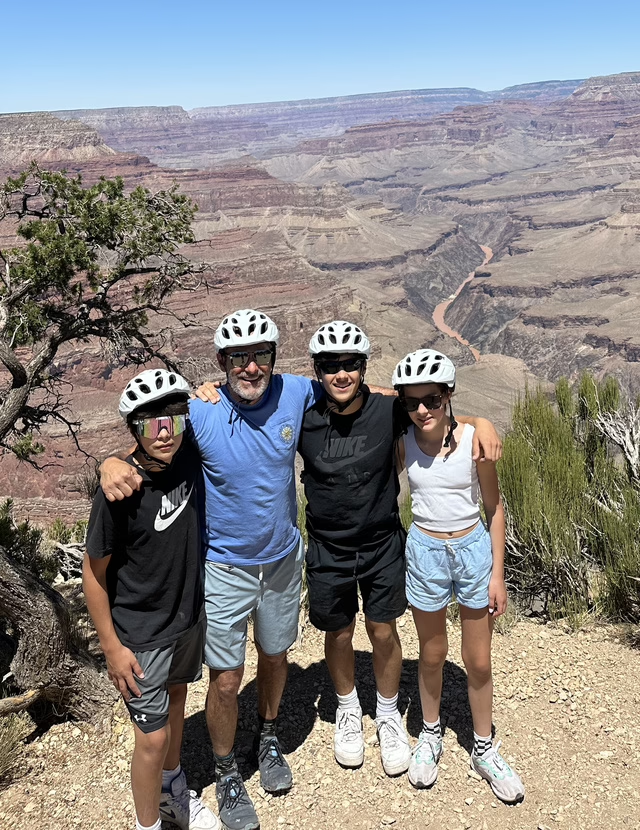
It’s not that Bobby Herrera doesn’t respect the majesty of the Grand Canyon. He just sees it differently. It may be one of the seven wonders of the world, but the founder and president of Populus Group would immediately swap it out.
“With great humility, I think the experts may have gotten it wrong,” Herrera says. “The Colorado River is the wonder here. It’s what created the canyon and so much of the beauty we see and the life it sustains. To me, the premium should be on creation, not the result.”
This is the philosophy that has guided the choices he’s made for some time, and it’s been getting more traction in Herrera’s mind as of late. The founder, veteran, author, speaker, and builder understands his narrative. He’s written his story, and he’s helped countless others find their own value and voices. But increasingly, Herrera sees a desperate need for what, on the surface, may seem like we already have in abundance.
“We don’t need more examples – we have that in abundance – we need more teachers,” the president says. “Whether it’s entrepreneurs or business leaders or influencers—whatever you want to call them—we need more leaders willing to “give away” what they’ve learned to accelerate the stories of others. There are too many too busy being the person on stage; true leadership is about putting others on stage.” We must teach in a way that makes others feel like we want “more for them, than from them.”
Consistency on Its Own is a Form of Greatness
When Herrera is talking about teachers, he’s not talking about YouTube shorts or minute-long Reels of distilled “learnings” from someone peddling their expertise. He references his favorite Greek proverb as a metaphor: “A society grows great when we plant trees in whose shade we may never sit.” He finds himself in a moment where he has built a lot. For Herrera, it’s to become, and to help others become, the Colorado River. That is, to find the most important part of their story and teach them the power of consistency to create their metaphorical Grand Canyon.
Herrera says, and says often, that consistency on its own is a form of greatness. For every leader trying to narrate their own story, build a company, or create some kind of legacy, it inevitably comes up against the reality of consistency. Greatness is not a single breakthrough or public milestone, it is the accumulation of small, repeated actions, choices, and habits that makes your story believable to the people around you. It inspires others to reframe their struggles, because your consistency through your own struggles created the gifts that became the strengths in your story.
“Whether you’re an expert talking about leadership, culture, or purpose, most everything has been written,” Herrera explains. “What is lacking is the sharing of that wisdom in a manner that helps the student apply those lessons. Great teachers show others how we created our own consistency – that in turn creates a breakthrough sense of confidence for people to say, “I do have what it takes.” But that’s a very difficult message to get across, because you need to first be a student of your own story and consistency to do it.” Herrera is very direct with audiences of leaders he speaks with about this call to action.
The river metaphor helps Herrera convey his own consistency in a way that helps others understand that the long way really is the shortcut.
The Unsung Hero of Leadership
The head of Populus Group argues that leaders unintentionally underestimate one of their most important responsibilities—the need to say the most important things over and over, and repeatedly. “Overcommunicating clarity is the unsung hero of building anything meaningful”. Too many leaders – fear the idea of repeating themselves —worrying they’ll insult people’s intelligence or sound like a broken record— but great leaders know it’s the only way to create the clarity that builds trust. People will not buy until they can repeat it themselves. His observation is that most leaders allow their own fears or insecurities of overcommunicating to become a form of avoidance, and that keeps leaders from truly leading.
“You learn the greatest songs of your life by hearing them over and over again,” he says. People have to hear a purpose, a standard, or an expectation time and time again before it can become part of their own beliefs.
That consistency, though, is tightly coupled with modeling behavior that builds trust. “People hear what you do before they hear what you say,” he says, and it’s when those repeated actions are met with repeated beliefs that real change happens. That is why Herrera insists on articulating non-negotiables around core beliefs, intention, and community. The flow never stops, and over time, it creates the world around it that others may regard as the Grand Canyon, something inherent and always just there. This is Herrera’s long game, not just for Populus Group, but his true purpose.
The Triangle of Love
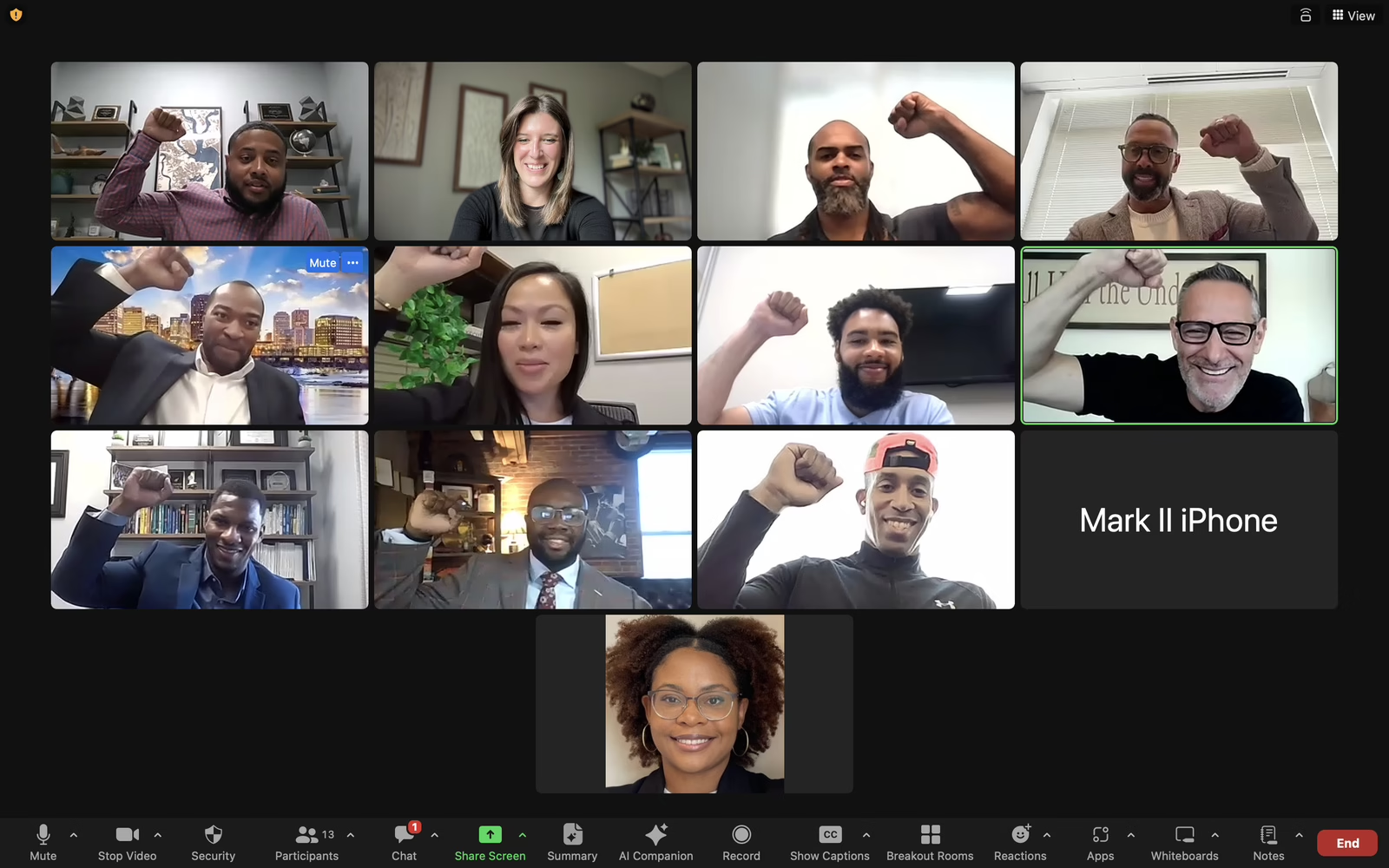
The first cultural pillar at Populus Group is “give more than you take”, born from a kind act that changed Herrera’s life as a young man. It’s a core belief anchored in paying our blessing forward with true generosity. And teaching is one of the most concrete ways Herrera believes he can live that out. Each year, he and his team select five to six minority- and/or veteran‑owned companies—sometimes direct competitors—and run them through PG’s Pathfinder program.
In Pathfinder, different Populus Group leaders come in to teach others what they wish they’d known at earlier life cycle stages of the Populus Group story. The leaders come from different parts of the ecosystem to share their lessons: sales, finance, writing RFPs, and other operating skills that shorten the learning curve for earlier‑stage founders. They don’t charge participants and don’t advertise it as a marketing play. Herrera sees it instead as a way to institutionalize his purpose and live out what it means to give more than you take.
With generosity comes self-accountability as there is not unlimited time for this kind of purpose. Herrera urges those who want to give back to find their “hell yeahs,” the causes they care so much about that it makes turning down others easier, because they know it allows them to give their full hearts and attention to issues that matter most. He calls it “choosing your impact”.
Once you choose where you want to make a difference, Herrera recommends approaching it by utilizing what he refers to as “the ‘triangle of love,’”. “You must give time, energy, and money to the parts of the world you want to improve. That’s how generosity is different than charity. Charity is often just money, or maybe you give a day to Habitat for Humanity. That is beautiful, and the world needs it, but true generosity and really giving, dedicating yourself to something, includes all three parts of the triangle.”
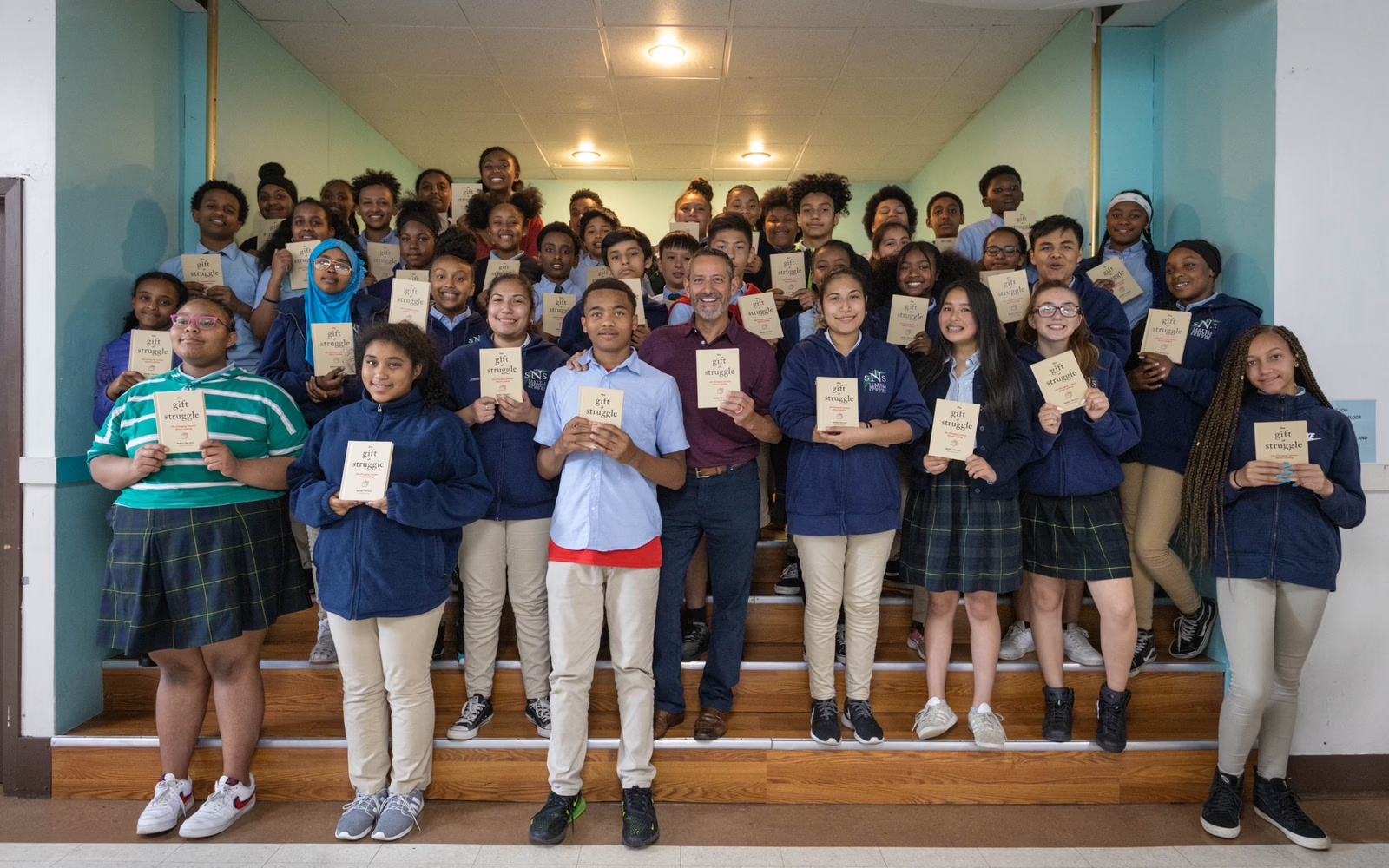
For him, this has also included supporting three scholarships for a school he has adamantly supported since 2014. He made the promise to keep that commitment for “as long as my story is around and hopefully longer.” He tells his own story directly to kids and jumps on calls with staff to help them persuade potential donors. This is consistency in motion like the Colorado River.
Before formalizing Pathfinder, he also ran pay‑it‑forward workshops on his own, choosing small cohorts of veteran entrepreneurs and committing to a year‑long rhythm of meetings with the expectation that they’d apply what he taught, and pay it forward to others down the line.
He viewed the time and dedication as a long‑term investment. There was no direct business return, but if one of them could do the same for someone else down the line, Herrera considered that a successful outcome. “A tree planted in whose shade he may never sit”. That cascading effect—turning recipients into future teachers—is where he locates the real leverage of his generosity, far more than any single company’s success.
Herrera, a leader himself, says there are too many CEOs and not enough people willing to give away their playbook in a way that’s consistent and deep enough to truly change someone else’s arc. A story, or an idea, can act like a gust of wind, and it can do a lot in a very short period of time. But the real change, the real legacy, requires the unending flow of generosity. Bobby Herrera is just trying to live it.
“All hail the underdogs.”