

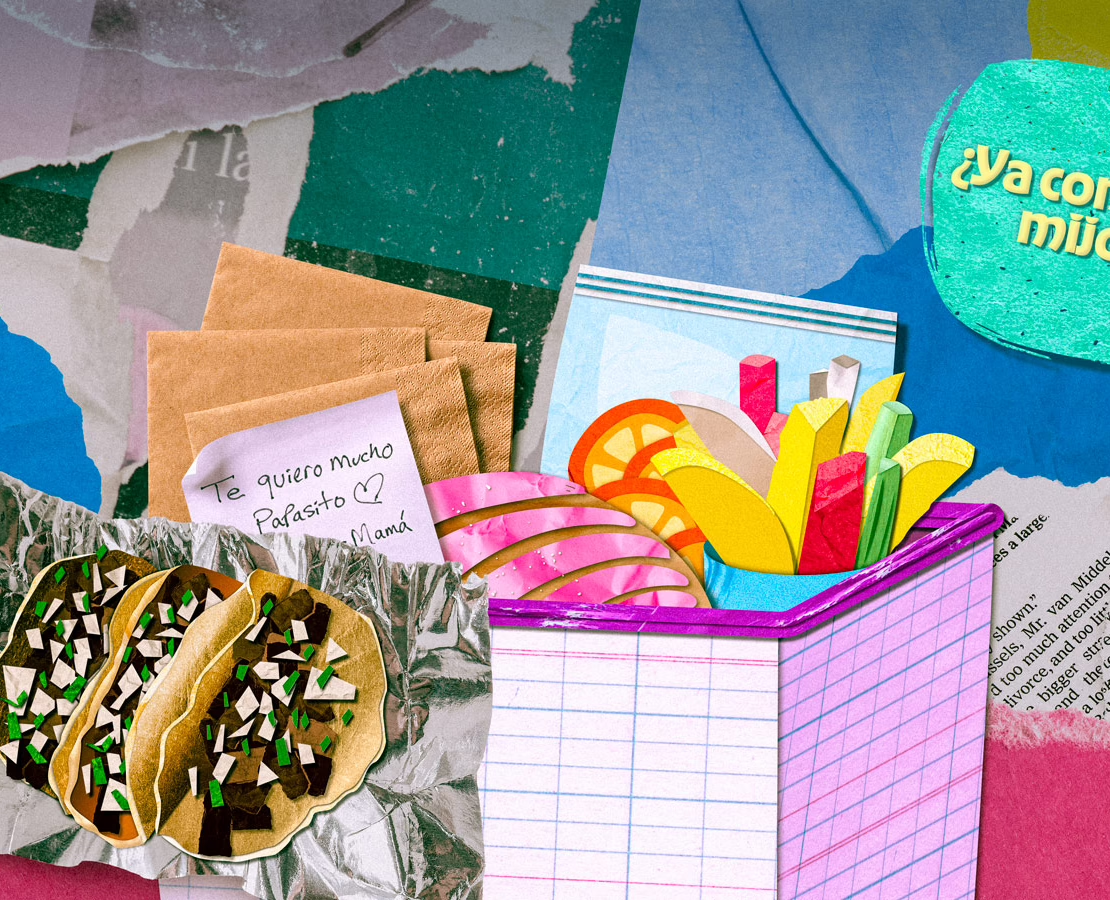

Last week, many parts of Latin America celebrated Mother’s Day. And if there are two things that unite Latin American moms, they are: the use of la chancla as a multipurpose tool (go read Hisplaining the Power of La Chancla, by the way) and the question, “Have you eaten?” A question that is not really a question.
Because nobody is particularly interested in a yes or no. The question, in reality, already comes with an action plan attached. If you answer no, the conversation ends and logistics begin. Because for many Latina mothers, hunger is not a physical condition. It is a system failure. And the system gets corrected.
That’s why “Have you eaten?” can appear in almost any imaginable context. Before saying hello, after a breakup, during an illness, or in the middle of a move. Even after you literally just said you already ate.
Especially after you said you already ate. Because then comes the second audit. “But did you eat well?” Followed by additional questioning until you agree to at least one more bowl of caldo.
There’s something deeply sophisticated about that emotional architecture. Gary Chapman talks about “Acts of Service” as a way of expressing love through concrete actions. Some people write letters. Others give gifts. Many Latina mothers developed the ability to cook an entire meal in under four minutes while simultaneously asking why you look tired.
And honestly, it works.
Because in many Latino families, love is rarely announced. It is managed. Served. Reheated. Sometimes sent home in a repurposed butter container that mysteriously never returns to its place of origin.
Affection does not always say, “I’m proud of you.” Sometimes it says, “I made rice because you probably haven’t been eating properly.” And the worst part is, they are usually right.
Food, besides, never arrives alone. It arrives accompanied by observation.
“You look thinner.”
“You have dark circles.”
“That’s not enough food.”
Latina mothers possess the unusual ability to turn a plate of food into both a psychological and medical evaluation. And you cooperate.
Because even if you are thirty years old, employed, carrying responsibilities and borderline cholesterol, the moment a Latina mother asks, “Have you eaten?” your body immediately returns to being nine years old.
There are studies about familism, maternal care, and community dynamics in Latino families, but honestly none of them explain the phenomenon as well as watching a mother insist on serving you more food while you say “I can’t anymore” with a level of confidence nobody at that table considers legally binding.
Because food is never just food. It is presence. It is attention. It is a way of making sure you are still here.
And maybe that’s why the question carries so much weight. Because underneath “Have you eaten?” there are usually other questions that are much harder to ask:
Are you okay?
Are you resting?
Are you taking care of yourself?
But all of that would probably feel too vulnerable.
So instead, we make enchiladas.
And there is something deeply Latino about that. About solving emotional things through practical means. About turning love into something tangible. About expressing care not through grand speeches, but by making sure nobody leaves the house hungry, even if they ate forty minutes ago.
That’s why “Have you eaten?” never really disappears. It just evolves. First it comes from your mother. Then an aunt. Then your grandmother.
And one day, without realizing it, you are out with your friends, somebody says they haven’t eaten all day, and you automatically respond: “So… do you want to order something?”
And that’s when you realize it was never really a question.
