
“In a year from now, I am hoping that all of us can enjoy a glass of wine and reflect on the contributions of this company. Because what’s coming is a game-changer.”
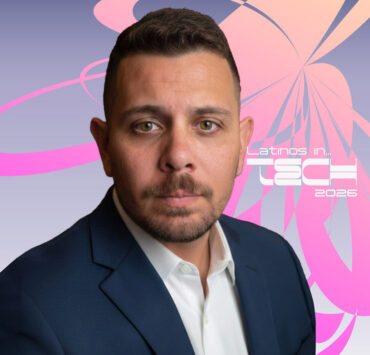
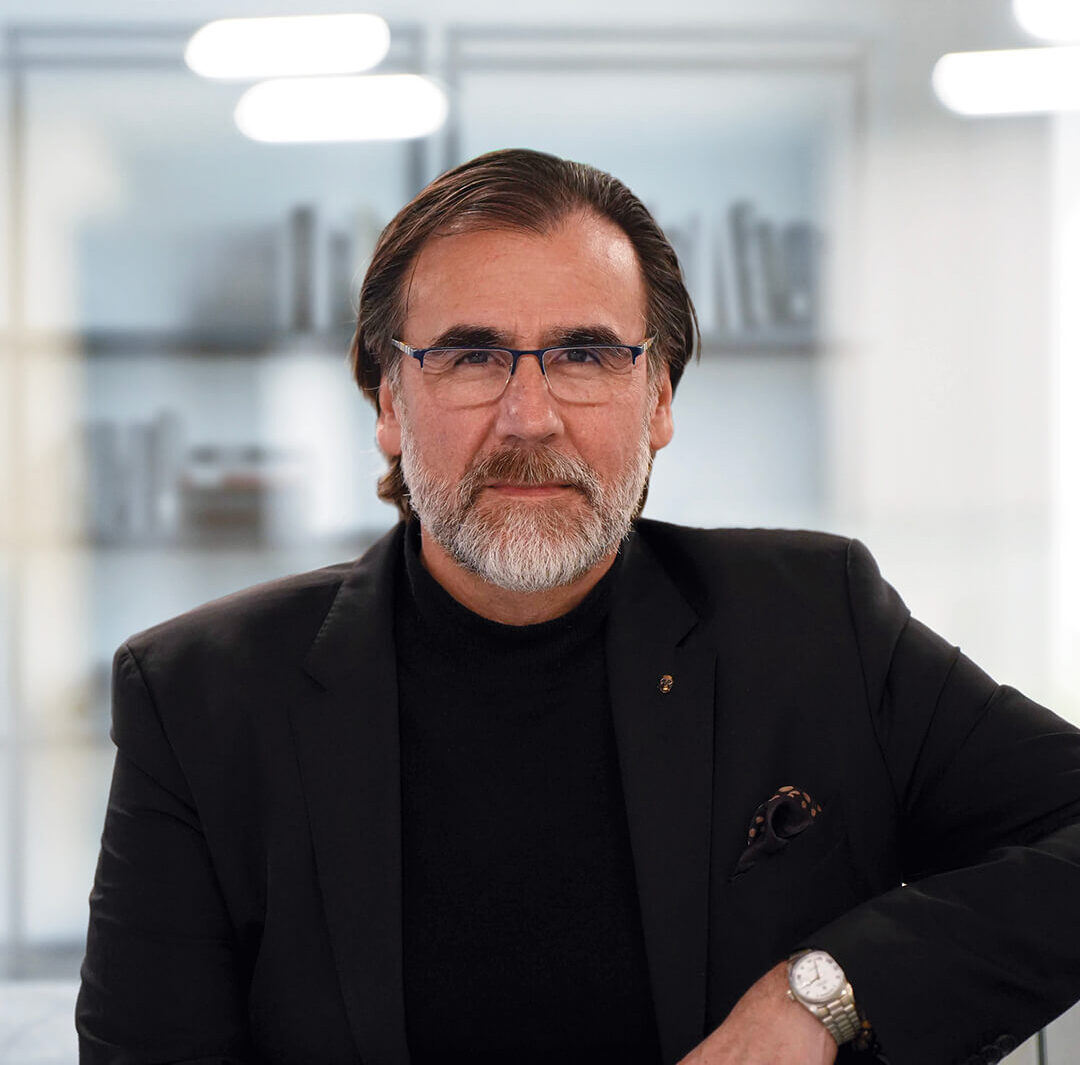
It’s an exciting moment to be Alejandro Martinez Galindo. Actually, you get the feeling it’s always been an exciting moment to be Martinez. The chief information officer at Fortrea is endowed with the kind of charisma that makes things happen. Some people are cultural and innovation drivers in more clandestine ways. Martinez is more of a force.
When the change agent—whose résumé includes nearly fifteen years at GM (including becoming its first CIO of Mexico), as well as Walgreens Boots Alliance and Capri Holdings—was asked to come to Fortrea, the job wasn’t going to be a cushy reward for his decades of intense IT transformation.
“It was an extremely complex conversation,” Martinez remembers. “Fortrea was spinning off from Labcorp, and it needed to be done within two years, or there were financial penalties that would accompany a delay. Our CEO knew what I had accomplished at GM, and so they were confident I could help make it happen.”
Martinez’s accomplishments at GM are likely still a source of inspiration for anyone coming up in its Mexican operations. He set his sights on becoming a global tech leader before most knew what kind of career they wanted to pursue. He deliberately charted his early path through the automotive sector, first at Mexican bus and truck manufacturers and then at PACCAR’s Kenworth joint venture on the US–Mexico border, where he learned how a massive global manufacturer runs IT across brands and geographies.
When GM Mexico went looking for its first CIO, they chose the young Martinez, who was willing to take risks others avoided. At a time when GM still relied heavily on outsourced IT and had no consumer‑facing web presence, Martinez raised his hand to pilot the first GM country website, GM.com.mx, while European peers hesitated to stake their reputations on unproven digital tech.

Success in Mexico led GM to hand him increasingly complex regional roles: first Latin America, then the combined Latin America, Africa, and Middle East portfolio, and later GM Europe, based in the UK. Suddenly, he was managing teams that spanned Spanish, Portuguese, Arabic, Hebrew, and other diverse business cultures as well.
Martinez may very well have spent his entire career at GM. But move after move and role after role, he was asked to take on an Asia Pacific job, and Martinez had to draw a line for both him and his family.
Fortrea would still offer up a whole host of new challenges for the longtime tech leader. When Martinez asked what people and infrastructure he would inherit, the answer came back on a “blank piece of paper”: only a skeleton team, a few legacy platforms, no pre‑baked architecture.
For many leaders, that would have been a deal‑breaker. For him, it was the opportunity he had been waiting for—a greenfield environment with the opportunity to be “born digital” in a sector that tangibly improves patients’ lives.
“At the end of the day, we need broad representation in clinical trial participation, including more Hispanics. I want people who look like me to learn more about clinical research.”
Alejandro Martínez Galindo
He accepted on two conditions, one of them the ability to be based in Europe after the first year, and the other to set about hand‑picking a compact, high‑performing global organization across operations, engineering, and architecture from his network. He calls it perhaps the strongest team of his career, even if it is the smallest by headcount.
Within that constraint, Fortrea completed its separation on time and now operates as a leading independent contract research organization (CRO) providing phase I-IV clinical trial management, clinical pharmacology and consulting services to biopharma, biotech, and medical device sponsors across more than twenty therapeutic areas and roughly one hundred countries.
For Martinez, the real prize of starting with nothing was that Fortrea could be born digital, unburdened by the legacy systems that absorb half of many IT budgets.
Advertisement
The most intriguing part of Martinez’s current mandate may be what he cannot talk about, at least not yet.
In partnership with Fortrea’s executive team, he is steering the build‑out of new AI-powered digital platforms that aim to re‑engineer the clinical trial lifecycle and help deliver clinical trials faster with greater predictability, agility and quality.
While he can’t say much, Martinez is hoping that he might be able to help encourage more Latinos to take part in clinical trials.
“At the end of the day, we need broad representation in clinical trial participation, including more Hispanics,” he says. “I want people who look like me to learn more about clinical research. If you’ve ever thought about it, please search out our organization and learn about what we do.”
Martinez cares deeply about his roots. He’s an avid student of Mexican history, and the Aztecs’ refusal to bow down to the Spanish, even as they succumbed to disease brought by the Europeans.
“I have that fight in my DNA,” he says. “I will never surrender.”