
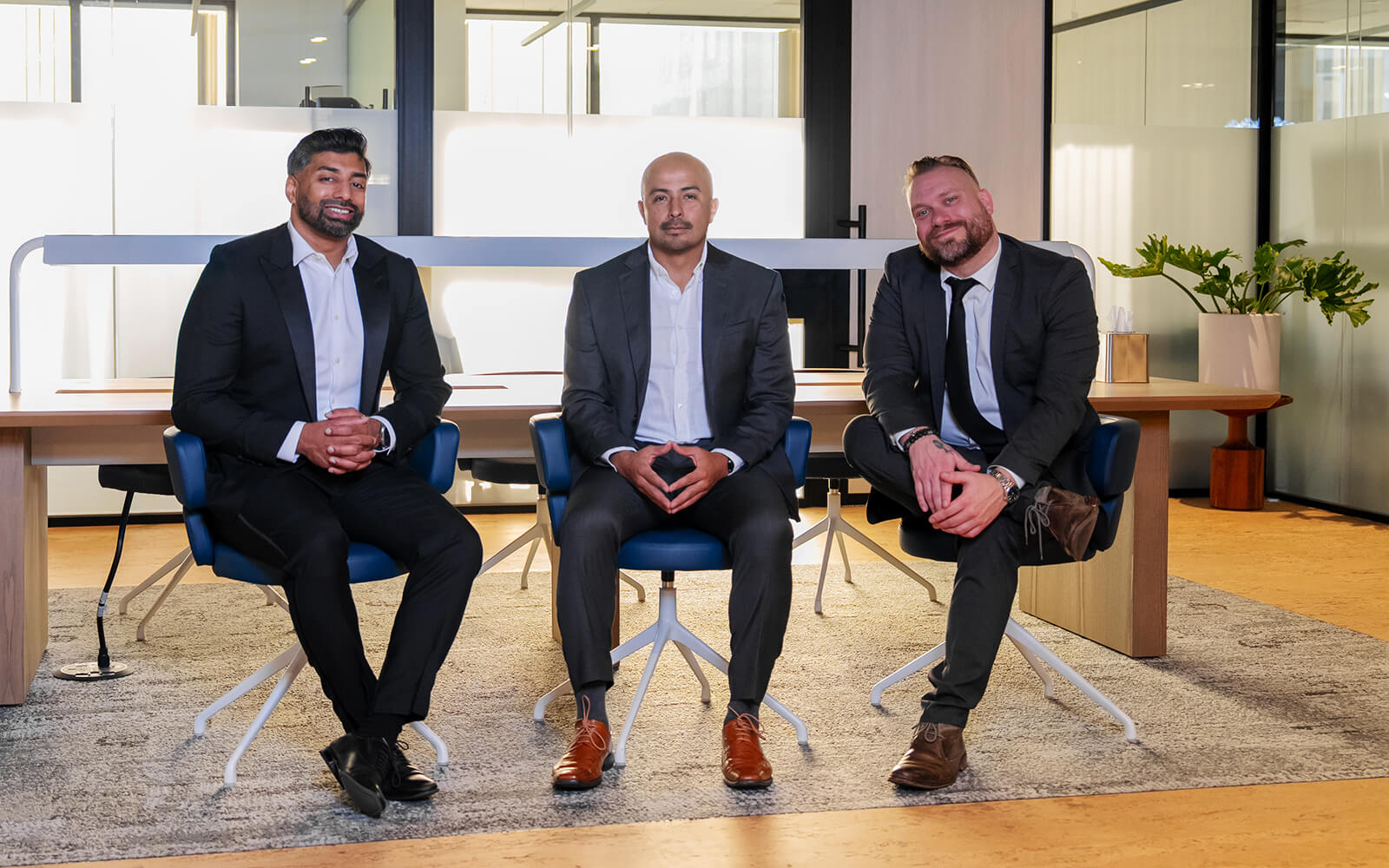
Clarity has been the word of 2025 during José Ferrel’s first full year as CEO of Clearmatrix. What began as a hopeful team of three co-founders sketching out an AI enablement platform has become a nearly twenty-person organization, a live product in pilot with real customers, more than half a million dollars in capital raised, and a $10 million opportunity pipeline heading into 2026.
When HE first profiled Ferrel, Clearmatrix was still more thesis than technology, a bet that businesses would need a better way to navigate an increasingly noisy AI marketplace.
“Everybody is trying to sell you picks and shovels in this AI gold rush,” Ferrel explains. “We’re building the GPS.”
Meeting Clients Where They Truly Are
If 2025 was to be the breakout year for AI in the enterprise, Ferrel’s vantage provides a serious caveat.
“2025 was supposed to be the year in which AI adoption in business really took off,” the co-founder reflects. “But, even now, that hasn’t yet been the case.”
Jose Ferrel’s Monday Morning Digest: Culture in One Email
Every Monday at Clearmatrix starts with a note from the CEO. José Ferrel’s “Monday Morning Digest” has become a routine, a way to scale clarity and culture as the organization grows.
Each memo hits three beats: highlights from the previous week, what Ferrel will personally focus on in the days ahead, and a brief reflection that ties back to Clearmatrix’s values. By spelling out his own priorities, he gives the team a transparent view into how he’s spending his time and invites accountability.
Ferrel also adds a human touch: what he’s reading, listening to, or doing over the weekend.
“I want them to see not just what I’m doing, but what’s on my mind,” the co-founder says. “I hope it reminds everyone that there’s a person behind the role and that we’re all in this together.”
The reality is a market that is far more conservative and methodical than the hype cycle would suggest. In conversations with prospective clients and investors, a common theme has emerged and should not be overlooked.
The fear of screwing up is outweighing the fear of missing out. Every week brings a new crop of “picks and shovels” vendors promising AI for legal contracts, AI for healthcare, AI for design, yet executives struggle to distinguish value from novelty.
Clearmatrix is positioning itself as the antidote to that paralysis, offering a structured “crawl, walk, run” rubric for AI maturity that meets organizations where they are, whether they are just experimenting with tools like ChatGPT or beginning to integrate embedded AI across systems like Salesforce or M365.
Expanding Service
The distinction may sound subtle, but for Ferrel and Clearmatrix, it is the differentiator. Traditional consulting players, from global firms like Accenture and Deloitte to boutique AI shops, still largely operate on a people-renting model, parachuting in experts to map out strategies one client at a time.
Clearmatrix is deliberately charting a different path, packaging that wayfinding into software-as-a-service so that more organizations, including small and midsize businesses, can access enterprise-grade AI guidance without enterprise-size budgets.
The platform assesses a company’s current state across infrastructure, data, workforce readiness, governance, and risk, benchmarks it against peers, and generates a roadmap that leaders can execute.
In 2025, that roadmap began to expand beyond single organizations. Clearmatrix started investing in a partner portal that would give private equity firms and channel partners a portfolio-wide view of AI readiness and progress, recognizing that sponsors now need to accelerate digital and AI maturity across dozens of assets on tight timelines.
Under the hood, the business model is also in transition. Clearmatrix intentionally launched with a consulting-heavy motion, using services work both to fund development and to learn how AI consulting should be done.
But as the platform matures, Ferrel and his co-founders are also pivoting based on what will best serve their clients. By their own target, moving to roughly 75 percent platform and product revenue and 25 percent services.
The Next Chapter of Clearmatrix
There is one thought Ferrel returns to more than any other.
“Clear vision is going to beat clever code any day,” the co-founder says.
In his work with other co-founders and executives, through accelerators, peer cohorts, and client engagements, he continues to see those starting with a shiny tool and then going in search of a problem. Clearmatrix’s own framework flips that sequence.
Every engagement begins with clarity on the business problem and the impact an organization is trying to achieve, before any discussion of specific models, vendors, or architectures. Only then does AI strategy become an extension of corporate strategy.
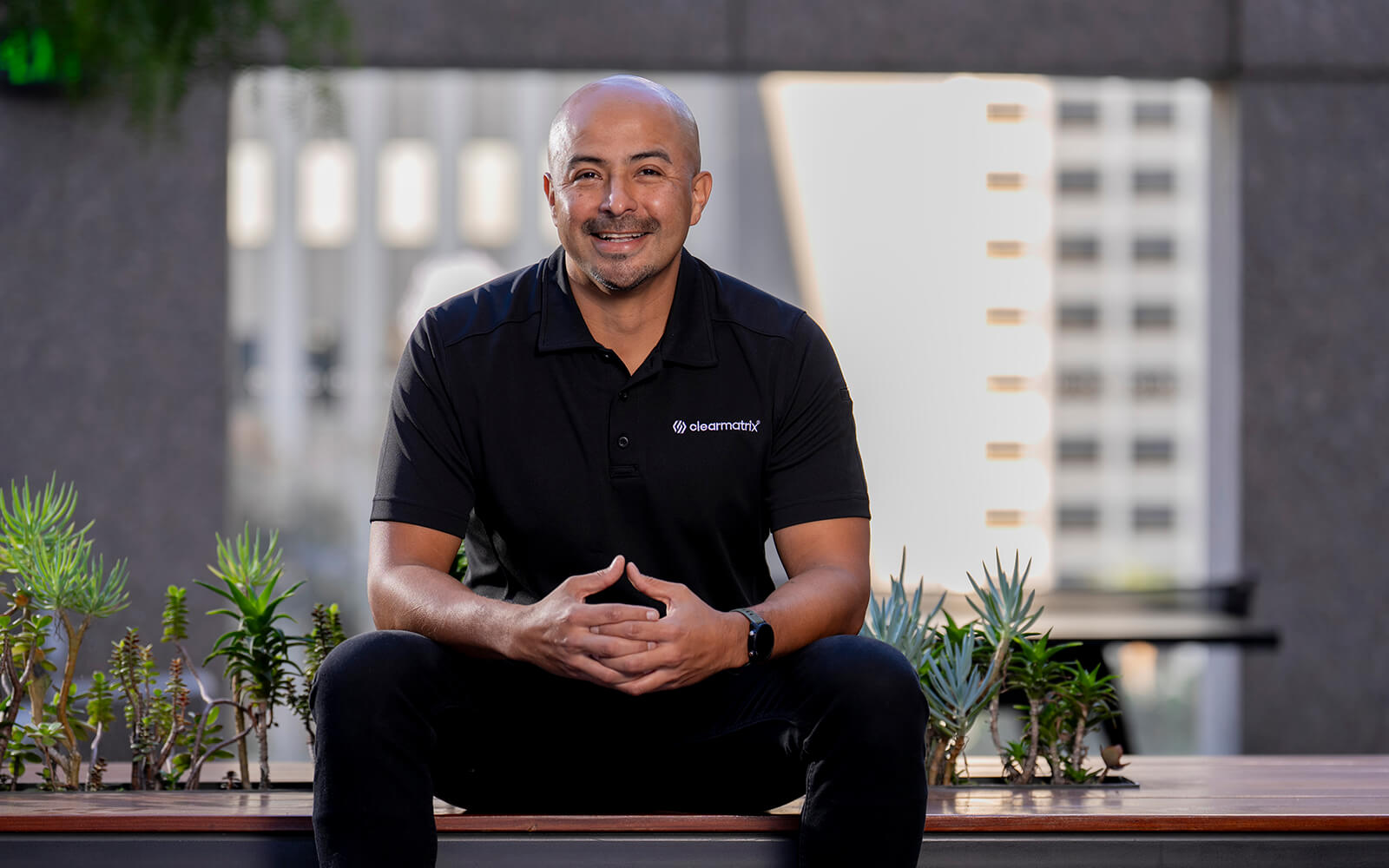
In the new year, Ferrel’s calendar is increasingly dominated by relationship work, investor relations, business development, and the strategic partnerships that can turn Clearmatrix from a promising platform into a category-defining one. At the same time, he maintains twice-monthly sessions with an executive coach to ensure his own leadership habits do not become a bottleneck to the company’s ambitions.
The co-founder carries into that work the perspective of a first-generation Mexican American whose parents built more with far less. When the constraints of startup life feel acute, the doors that do not open, the resources that are not yet there, he just remembers his parents.
The next chapter of Clearmatrix will hinge on whether Ferrel and his team can continue to translate that grit, and the clarity it forged, into a platform that finally gives businesses something the AI market has rarely offered: a confident way forward.