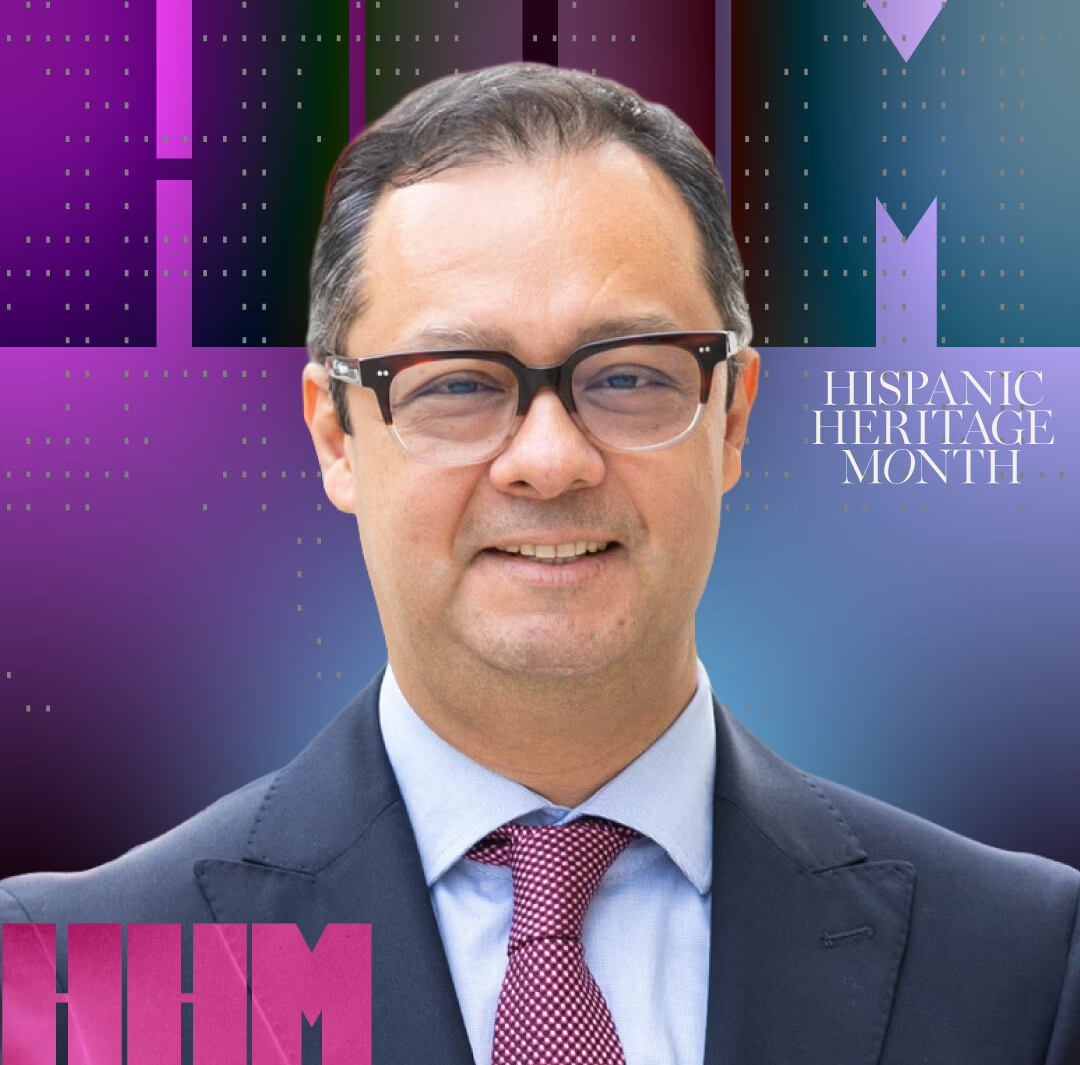

As an economist beginning his career in Mexico, Gabriel Yorio—who would go on to become vice president for finance and administration of the Inter-American Development Bank—noticed a gap between the abundant expertise devoted to public policy and the comparatively smaller cohort of people who understood the financial mechanics that make policy possible.
Education, health, and economic development all had legions of specialists. Far fewer professionals, he saw, were focused on balance sheets, debt portfolios, or treasury operations that make it possible for the government to operate.
“That’s when I realized that was something I wanted to do, finding ways for public policy financing,” Yorio recalls. “That was when I found the purpose of my career.”
That career has crossed sectors and borders, from Banobras, Mexico’s national infrastructure development bank, to the World Bank, the Mexican Ministry of Finance, and now the Inter-American Development Bank (IDB), where he serves as vice president for finance and administration. Yorio is fluent in the myriad languages of public policy, markets, multilateral institutions, and government. Each one, he says, is vital to his work today.
“I have spent my time moving between government and development banks,” the VP says. “When I’m on one side, I understand the other side—or maybe, more importantly, I understand what I don’t understand. When I have taken on a new role, I’ve brought that experience with me and applied it to that new perspective.”

That bidirectional perspective is especially valuable at the IDB, where financial decisions carry implications for governments and communities throughout Latin America and the Caribbean.
While his tenure at the organization has been relatively short, Yorio has made significant strides with the weight of the IDB behind him.
The bank has increased its annual lending capacity from roughly $16 billion to nearly $20 billion. Last year, the IDB Group reached $35 billion in mobilization and lending, a historic level for the institution. Looking further ahead, he says the IDB Group aspires to mobilize approximately half a trillion over the next decade.
The task is not simply to lend more. It is to preserve the IDB’s triple-A credit rating while expanding its capacity to fund development. That rating gives the bank access to lower-cost financing, an advantage it can extend to its member countries.
The bank is also working to embed provisions for disaster risk, currency hedging, and interest-rate hedging into lending contracts. In the event of an economic or financial shock, a member country can activate those built-in tools. The goal is to give governments more resilience and flexibility than a standard loan alone can provide.
“If we bring more value in the contracts, we can provide more value to the membership,” Yorio says. “It goes beyond the value that we are lending.”
He also points to the IDB’s first Amazonia bond as an example of connecting financial markets to development outcomes. The bond was designed to mobilize resources for social and economic priorities in the Amazon region while helping investors see and align with the impact of IDB-supported programs.
The bank has also expanded a program that manages international reserves for central banks. What began as a pilot has become an IDB program, with assets under management growing from about $600 million to $1.6 billion this year. For Yorio, that growth reflects not only demand for the service but also trust in the institution’s teams and capabilities.
Yorio’s own perspective on his work has evolved. These days, he’s eager to spend as much time as he can working with the next generation of financial leaders. He speaks with students at institutions such as Georgetown University and George Washington University, offering his perspectives based on his own career rather than prescriptive advice. The one piece of advice he reluctantly shares is an important consideration.
“Very early on, I learned that I should not evaluate career decisions only based on salary,” the VP says. “If that were the case, I probably would not be where I am today.”
That choice meant not coming to the IDB sooner in his career. Yorio elected to come to Washington, D.C., to earn a master’s degree and better understand the politics and public policy of the capital rather than take an earlier role at the IDB that would have paid well but required him to move to another country.
“I learned very young that I shouldn’t evaluate my decisions only based on salaries,” Yorio says. “I’m making decisions based on purpose, career projection, and reputation.”
After many years working at the World Bank, Yorio was ultimately able to bring that public policy experience back to Mexico, where he became the country’s deputy treasury secretary and helped oversee its relationships with multilateral development banks. During the COVID-19 pandemic, he participated in discussions at the G20 and OECD about a pressing question: How could governments meet a historic moment of need when fiscal resources were constrained?
The answer, in part, was to make multilateral development banks more financially capable. The G20 pushed MDBs to optimize their balance sheets, improve capital adequacy, manage risk, and increase lending capacity without compromising the credit quality that allows the institutions to borrow at favorable rates.
So while it may have taken a little more time for Yorio to find his way to the IDB, the person who finally arrived has truly unrivaled experience in the role. And, fortunately, Yorio seems energized to pass those lessons on to anyone hoping to emulate his path.
‘The North American Development Bank (NADBank) was established more than 30 years ago by the U.S. and Mexican federal governments to help communities and businesses achieve cleaner water, cleaner air, and a healthier environment. We are grateful to Gabriel Yorio for his leadership as Chairman of the Board of NADBank. During his tenure, NADBank expanded its impact, strengthened its financial position, and advanced critical investments in water, energy and other infrastructure across the U.S.-Mexico border region,” said John Beckham, Managing Director of NADBank. “We thank Gabriel for his service to position the Bank for long-term growth and benefit to border communities.”
–John Beckham, Managing Director, North American Development Bank