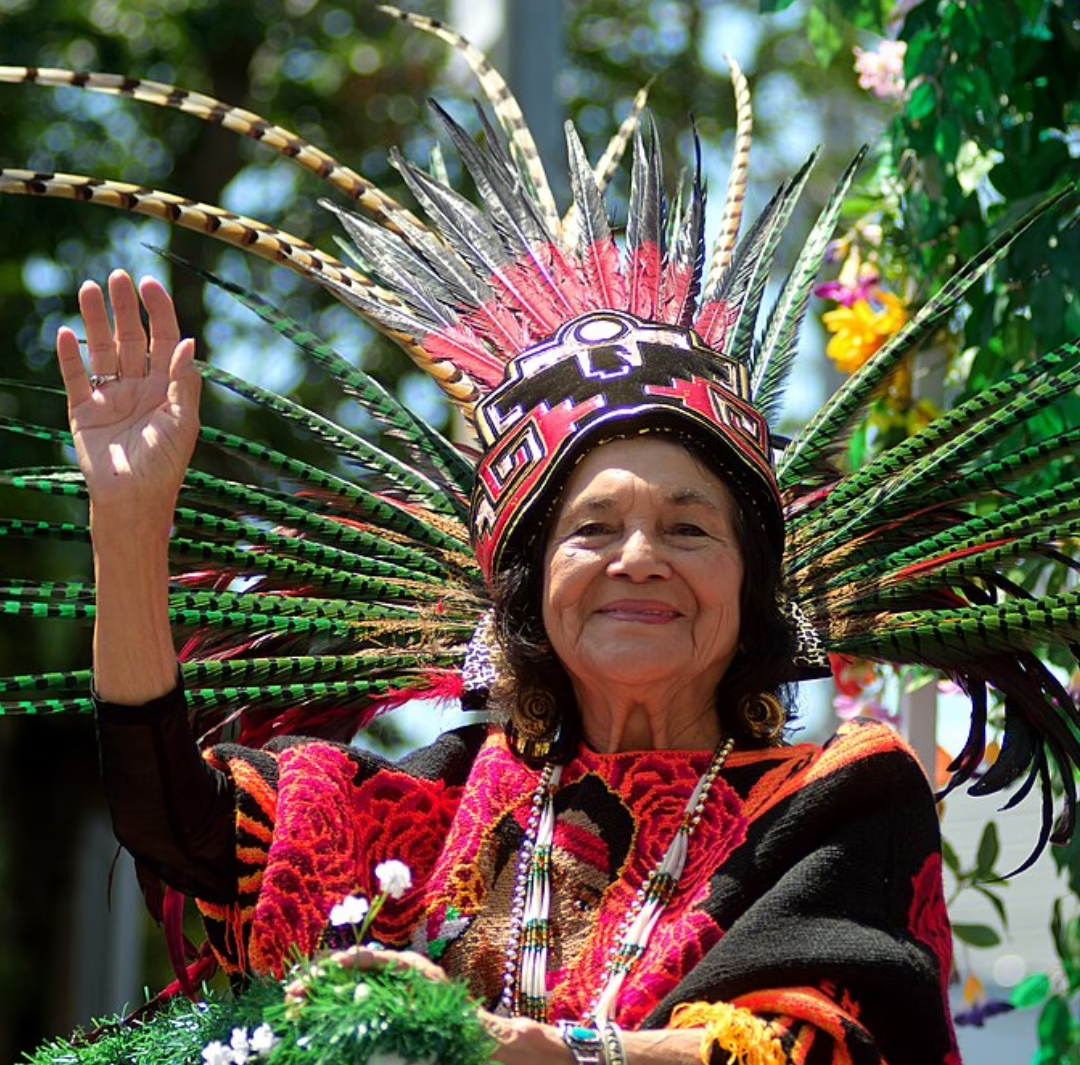
Dolores Huerta, the pioneering labor leader who helped transform American agriculture and redefine the role of Latinos in the nation’s labor movement, died Wednesday, October 28, at her home in Bakersfield, California. She was 96.
Best known for coining the rallying cry “Sí, se puede,” Huerta leaves behind a legacy that extends far beyond the slogan. Over more than six decades, she helped shift the balance of power between agricultural workers and some of California’s largest growers, securing historic labor agreements and advancing protections that reshaped an industry.
Her influence was built not in corporate boardrooms, but across negotiating tables, picket lines, and legislative chambers.
Born in Dawson, New Mexico, in 1930, Huerta was raised in California’s San Joaquin Valley. She initially worked as a teacher before turning to community organizing, driven in part by the poverty and difficult conditions she witnessed among farmworker families.
In 1962, she cofounded the National Farm Workers Association with César Chávez. The organization would eventually become the United Farm Workers (UFW), one of the most influential labor unions in American history.
While Chávez became the movement’s most recognizable public figure, Huerta emerged as one of its principal strategists and negotiators.
In 1966, she played a central role in negotiating a landmark agreement with Schenley Industries, a major agricultural producer. The contract, reached after months of strikes, organizing, and consumer pressure, marked a breakthrough in the struggle for collective bargaining rights among farmworkers.
The agreement demonstrated that workers who had long lacked meaningful bargaining power could successfully negotiate with major agricultural businesses.
Huerta also understood that changing an industry’s practices required influence beyond the workplace.
During the Delano grape strike, which began in 1965 with Filipino farmworkers, she helped organize nationwide consumer boycotts that brought the struggle into American supermarkets and households. By mobilizing consumers and drawing attention to working conditions, the movement placed economic and reputational pressure on growers.
The strategy helped secure collective bargaining agreements in 1970, demonstrating how organized workers and consumers could challenge entrenched corporate power.
Those victories helped build momentum for the California Agricultural Labor Relations Act of 1975, which established collective bargaining protections for agricultural workers in the state.
Through contracts negotiated by the UFW, farmworkers gained access to improvements including healthcare, retirement benefits, rest periods, clean drinking water, and workplace safety protections.
For Huerta, however, the struggle extended beyond labor contracts.
As a Latina navigating predominantly male political and labor institutions, she challenged assumptions about who could exercise authority and influence. Her contributions, often overshadowed by Chávez’s public prominence, helped establish a model of leadership rooted in organizing, coalition-building, and the ability to deliver institutional change.
In 2002, she established the Dolores Huerta Foundation to continue advancing grassroots organizing, civic participation, and leadership development. A decade later, President Barack Obama awarded her the Presidential Medal of Freedom, the nation’s highest civilian honor.
Huerta’s legacy is inseparable from the history of American labor, but it also belongs to the broader story of Latino economic influence.
She demonstrated that leadership is not defined solely by the positions people occupy, but by their ability to change the institutions around them and expand opportunities for those who have historically been excluded from power.