|
Getting your Trinity Audio player ready...
|
He is the youngest president ever to lead a public university in New Jersey and only the third Hispanic to ever do so, and Andrés Acebo carries that distinction like someone accustomed to responsibility arriving early. There is nothing hurried about his cadence. It is not tired, and it is certainly not out of touch, but it feels beyond his four decades.
It is measured, direct, and shaped by consequence. You get the sense that he has spent less time thinking about how leadership should look, and more time deciding what it requires. His leadership bears the weight of someone formed early by consequence, by watching loved ones shoulder burdens quietly, by learning that survival and dignity are often negotiated at the same time. He’s had to grow up quickly and under some of the most intimidating circumstances in higher education.
Acebo did not ascend into the presidency during a period of stability. He stepped into it willingly and daringly during a fiscal emergency serious enough to threaten the future of a public anchor institution of higher education that predominantly serves first-generation working-class students. The moment demanded speed, clarity, and credibility—not theatrics. Those conditions tend to reveal who can lead organizations and communities through complexity and who cannot.
When Acebo accepted a role at New Jersey City University (NJCU) in 2021, nobody—especially him—imagined he would assume the presidency less than two years later. But as the crisis deepened, more established individuals with safer options declined to step forward. Acebo did not. He understood what hesitation would cost.
And so, he stepped forward, bringing with him a leadership style defined by moral urgency, vision, and decisiveness. The role was not gifted, and it wasn’t inherited. It was earned through trust. Acebo rallied faculty, staff, administrators, and community members and leaders, many of whom could also have chosen easier paths elsewhere, to commit to the institution’s mission over convenience.
Within months, decisions arrived heavy and fast. The university moved from fiscal emergency toward stability. There were numbers that could not be ignored and people who could not be reduced to them. Decisions were made quickly and with an uncommon level of institutional honesty, compassion, and presence. Deficits were reduced. External confidence returned. Plans that had long stalled began to move.
What emerged was not just recovery, but momentum.
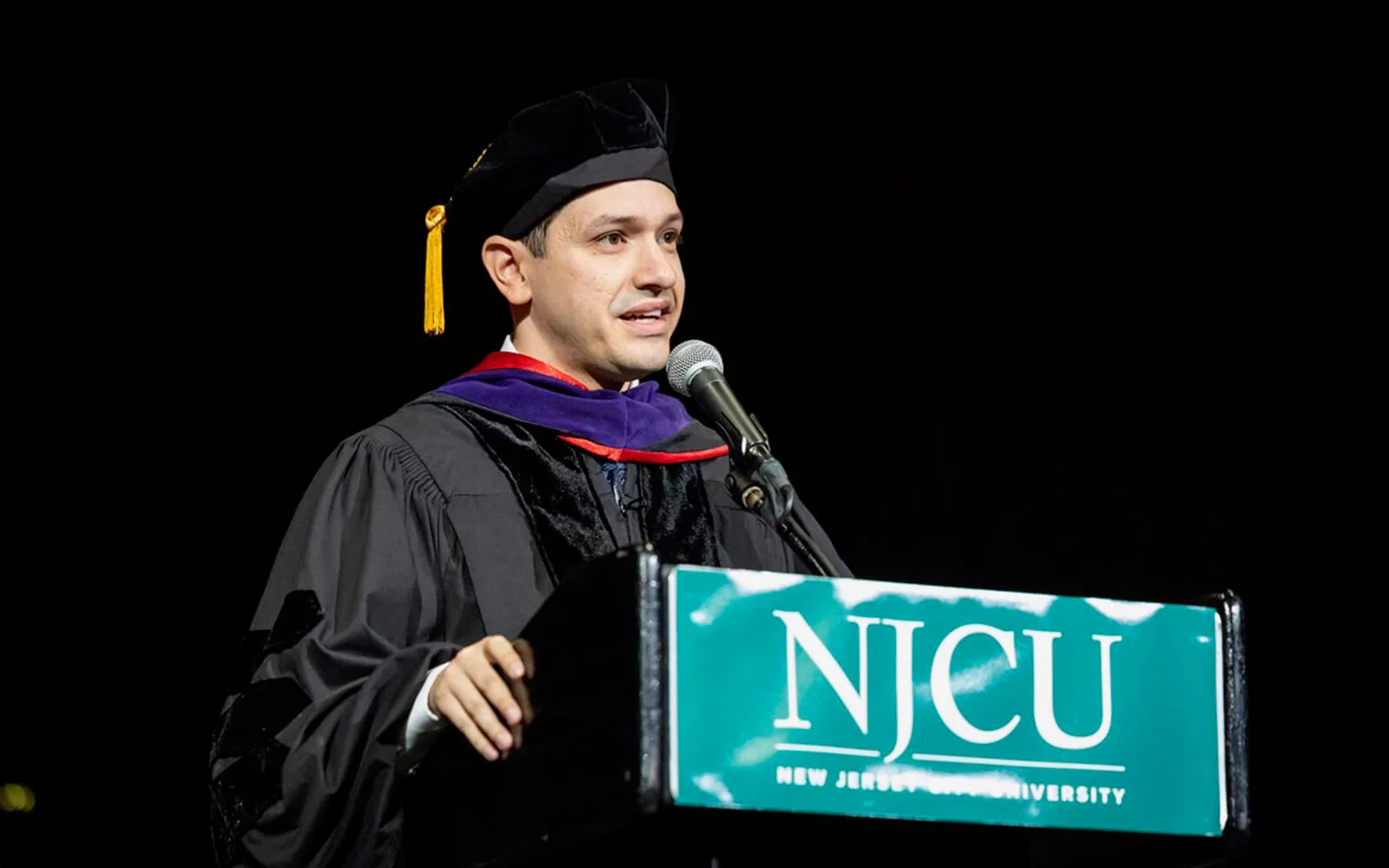
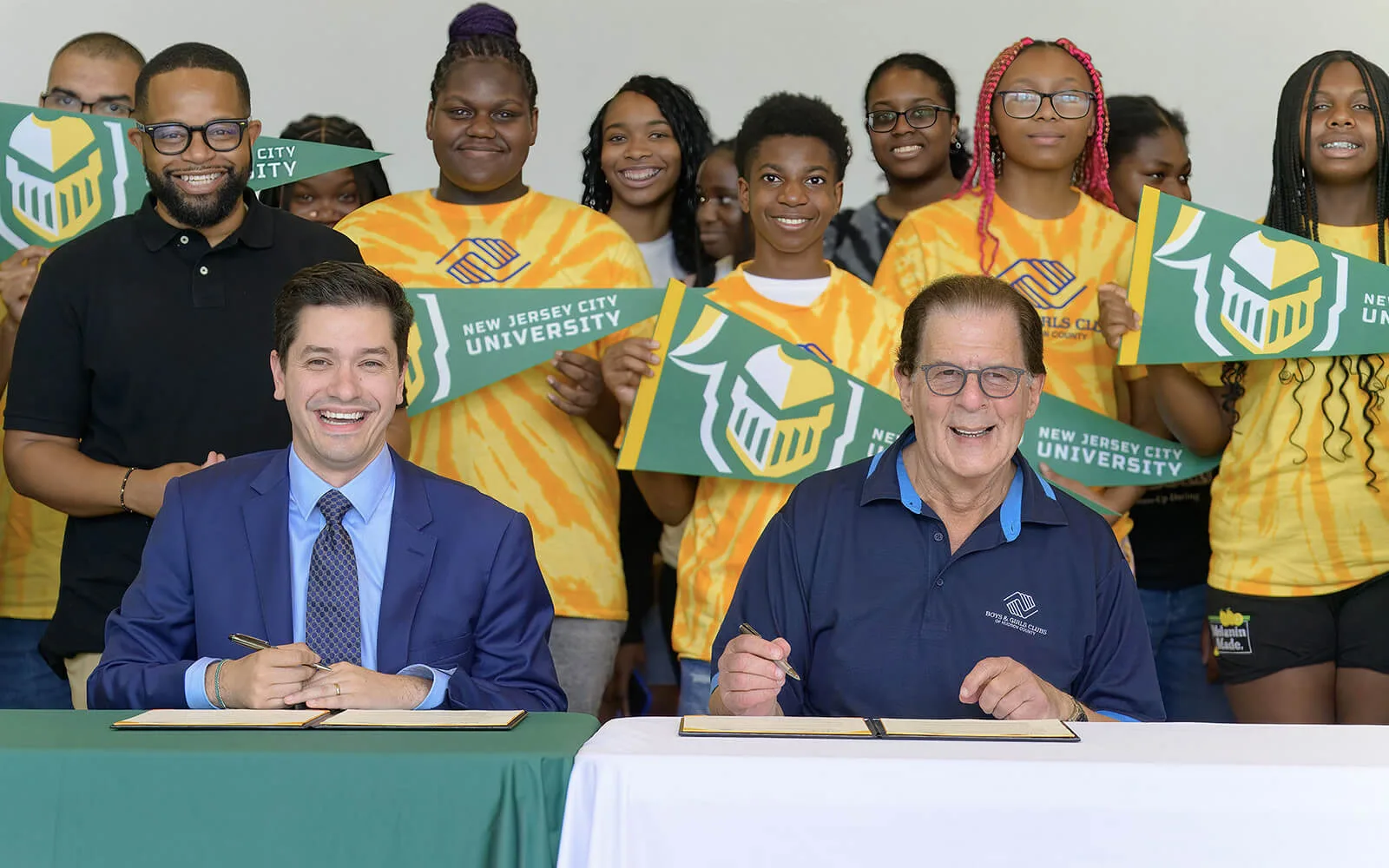
Acebo led a comprehensive stabilization effort that secured tens of millions of dollars in State investment and reduced long-standing operating deficits and debt. He rebuilt relationships and forged new partnerships with school districts, nonprofits, chambers of commerce, and small businesses. The effort created articulations with community colleges and international institutions while strengthening ties with organized labor, trades, and regional consulates.
All of this centered NJCU’s role as an anchor institution and community pillar. Credit rating agencies Moody’s and Fitch issued positive outlook upgrades for the first time in at least two decades—milestones that repositioned the institution’s future.
Under his leadership, NJCU has undergone a rapid and intentional transformation that restructured its academic and operational model. The university did more than stabilize. It reimagined itself. Academic pathways were enriched. Transfer doors were widened. Schedules became promises instead of riddles. Enrollment responded. Students stayed. Families exhaled. The university affirmed itself as one of the nation’s top universities for social mobility and affordability.
Transformation, in Acebo’s telling, is not spectacle. It is systems that finally work for the people they were built to serve.
Acebo’s tenure has not only stabilized NJCU but also set the stage for a historic merger with Kean University, poised to create Kean Jersey City and further expand affordable, accessible, and transformative public higher education for thousands of predominantly first generation and working-class students in the State’s most diverse and densely populated region.
Acebo does not describe this period as rescue. He describes it as stewardship under pressure. “Leadership,” he says, “requires proximity to consequence. If it doesn’t cost you something emotionally, you’re too far removed.”
He believes leaders should feel the weight of their decisions not because it slows them down but because it sharpens judgment. That sensibility is generational. “I have been shaped by proximity to struggle, by an understanding that opportunity is fragile, and by a conviction that leadership exists to create momentum others can step into,” Acebo reflects.
The new president’s approach feels like an exercise in Brad Blanton’s Radical Honesty, one centered on transparency through very hard choices. That approach earned him the trust of a campus community that needed hope as much as stability.
That proximity defines his leadership style. A first-generation college graduate and the son of Cuban immigrants still paying his own student loans, Acebo understands institutions not as abstractions but as systems that either widen or narrow opportunity. He leads with that awareness, pairing decisive execution with a refusal to dehumanize complexity. The result is leadership that moves quickly without losing legitimacy.
“I feel a great responsibility to this work. My loved ones are alums of this institution. Teachers that poured so much into me found their footing on the very campus I am privileged to lead. The mission of this place has impacted me personally. Someone had to step in during this incredibly challenging time, but don’t think for a minute that I was not acutely aware of what my age or experience would represent and the added responsibility it carried,” he says.
None of this was accomplished easily; Acebo immediately cuts to the quick about the reality of the situation.
“Our community knew we were on the brink of collapse and that significant change was necessary. I also think the community needed a leader who they knew would lose sleep about the decisions they had to make and its impact on people. I love this work and the mission that this place comforts. And when you love something that means you open yourself to have your heart be broken by it at times,” he says.
On the eve of a historic merger that will reimagine the campus for generations to come, his University Senate adopted a measure thanking Acebo for his leadership during the university’s most consequential chapter. This is what Acebo means when he says compassion and hope are strategies that don’t just steer organizations but elevate the conscience of its people. He’s been told time and time again not to take the work so personally and to protect his heart from the work. He believes there are too many people sitting in leadership positions who don’t take them personally enough.
“Leadership requires proximity to consequence. If it doesn’t cost you something emotionally, you’re too far removed.”
Andrés Acebo
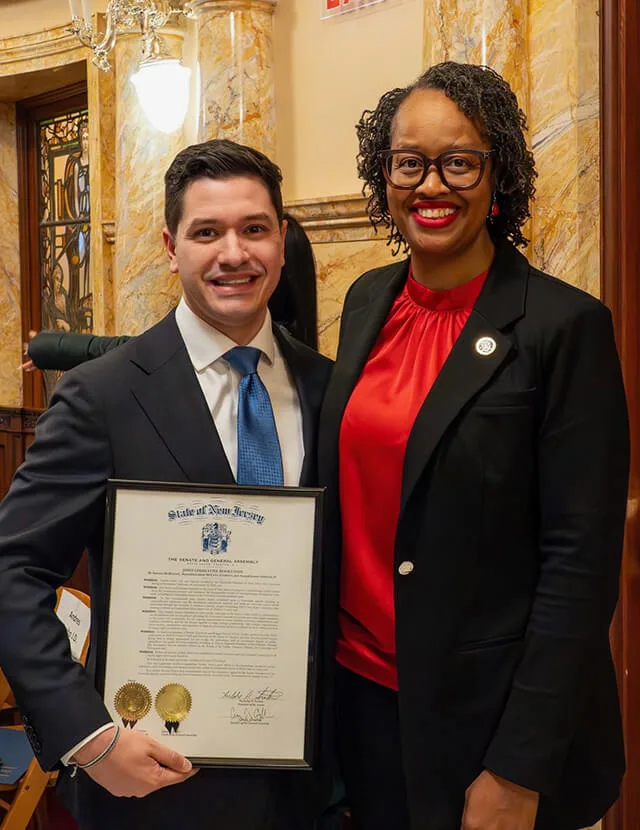
His work and his heart have been celebrated on the floor of the US House of Representatives and the New Jersey State Legislature. Yet for Acebo, those recognitions register less as accolade and more as responsibility. A reminder that leadership, at its most meaningful, is rarely uncomplicated.
That sense of responsibility is deeply personal. On the day of the State Legislature’s recognition, Acebo’s young children toured the State House and the Governor’s Office. He heard his last name read aloud on the chamber floor, the same name his father carries—a man who arrived in the United States on a small craft from Cuba in pursuit of freedom guided only by a compass that now sits on Acebo’s desk. A reminder of what courage and faith compel. One generation separates survival from opportunity. Acebo feels that distance in his chest and the duty it demands.
“I’m so grateful to have been able to surround myself with people who ran into the fire with me, who respected the challenges at hand, and allowed me to lead without losing myself in the process,” he says. “I wanted to protect dignity and pursue hopeful things. I wear my heart on my sleeve, and I’ve done my absolute best to protect this mission and the extraordinary people in touches by emulating the grit and resolve of the community we’re privileged to serve.”
For Acebo, success is not measured by what remains unchanged, but by what endures. Institutions, he believes, exist to carry people to their promise. And while he may resist the language of legacy, it is hard to ignore the generational arc. His children witnessed their father honored, just as he still reflects on his own father’s journey with quiet awe.
What Acebo hopes they remember is not the resolutions, accolades, or the title, but the ethic that guided every decision: that leadership is service, stewardship is love made visible, and responsibility, once accepted, must be carried with dignity through every stumble and every doubt.
If the measure of a great leader is leaving a place better than they found it, Acebo’s tenure will go down as a bona fide success. But the university president says the way it was done, the way that those most impacted were thought of and treated, is equally as indicative. Acebo can go to sleep every night knowing he did his best to serve the entirety of a near century old public university anchored in the state’s most diverse and densely populated city.
Ask Acebo what comes next and he does not describe a position or an office. He describes usefulness. “I just want to discharge the offices of life with usefulness. Where I can make a difference and be where I’m needed and honor the opportunities this life has afforded me that too many find beyond their reach. Hard work and unrelenting hope have always placed me where good luck has found me,” he says—the same answer he gave when the crisis first arrived.
Acebo represents a generation of leaders shaped less by institutional pedigrees than by lived proximity to struggle. He speaks easily about budgets and bond ratings, but just as readily about dignity, belonging, and the unseen costs first generation and working-class families carry.
At forty, he represents a new archetype in executive leadership. Visionary without detachment, decisive without cruelty, and ambitious on behalf of others. Acebo is part of a generation reshaping institutions and communities not by waiting their turn, but by answering the moment.