|
Getting your Trinity Audio player ready...
|
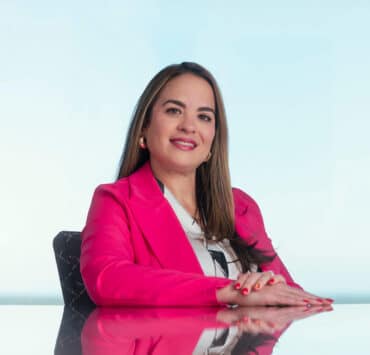
Alessandra Zaldívar-Giuffredi’s legal career mirrors her upbringing: the constant interpolation between different cultures and leveraging of her global mindset. From the day she was born, Zaldívar-Giuffredi heard three languages spoken around her: Italian spoken by her mother, Spanish by her father, and English by neighbors and friends. She jokes her home growing up was a “mini-United Nations.”
Zaldívar-Giuffredi is the daughter of a Cuban-Venezuelan father whose family moved to Caracas, Venezuela during the Cuban revolution, and an Italian mother, whose family hails from Parma, Italy. Both her parents are immigrants and attorneys. Throughout her childhood, the pair was deeply committed to their daughter holding onto and cherishing the very best of her cultural heritage by exposing her to their respective native languages and cultures as well as encouraging her to travel and study abroad from an early age.
“At home, we were allowed to speak only Spanish or Italian; English was forbidden and reserved for school,” Zaldívar-Giuffredi remembers. “I was not even permitted to speak Spanglish. Although I’m not sure what you would call what we spoke at the dinner table. It would veer from Italian to Spanish to maybe something only our family could understand.”
In addition to her parents, the city in which Zaldívar-Giuffredi was raised ignited Zaldívar-Giuffredi’s pride in her cultural heritage. She attests that growing up in Miami, Florida provided one of the most unique experiences a Latino can have in the States, an environment where you see people like yourself, of your same ethnic background, doing all jobs imaginable. Be it a physician, a lawyer, or any other profession that requires extensive education, Zaldívar-Giuffredi says there were examples all around her in a city oozing with Latin culture. Growing up in Miami, equipped her with an inner strength and pride in her ethnic background, while also lining her up for a big-time culture shock when she arrived at Wellesley College in Massachusetts, where she was recruited as a coxswain for the rowing team.
“I went from being a coxswain in Miami, surrounded by teammates who could all pronounce my name and coaches who barely spoke English,” Zaldívar-Giuffredi recalls, “To suddenly being on a team where I was one of two Latinas at any given time.” This experience made Zaldívar-Giuffredi empathize with and reflect about the experience of many Latinos growing up outside the Miami bubble—many who may feel hindered by their heritage because they never saw people of their same background occupy certain professions or hold positions of power. “It made me incredibly grateful for and proud of my cultural background, and it has inspired and empowered me to, today, leverage my experiences to help and serve those who didn’t grow up in a place like Miami, showing them (while reminding myself) there is and should always be a seat for all of us at every table, if we want it, and strategizing how to claim that seat.”
Beyond attuning Zaldívar-Giuffredi to her own Latinidad, her role as coxswain on Wellesley College’s rowing team proved formative for her legal career. The teamwork, discipline, adaptability, and experience serving as an advocate for her rowers not only helped her boat and team win the NCAA Championships for the first time in school history, but it also inspired Zaldívar-Giuffredi to pursue law school. “Being a coxswain in many ways is akin to what I do as an attorney. At the end of the day, it’s client service,” Zaldívar-Giuffredi remarks. She explains how a coxswain’s value lies in their service and commitment to the rowers and strategic precision—ensuring the boat is moving as efficiently and effectively as possible to win the race, playing on the strengths of each team member and keeping them and the boat safe. In much the same way, she says, “An in-house attorney’s job is to service business clients by strategically (and many times creatively) getting to ‘yes’ as efficiently as possible, learning and playing to each clients’ preferences while minimizing legal risk and keeping the client safe.”
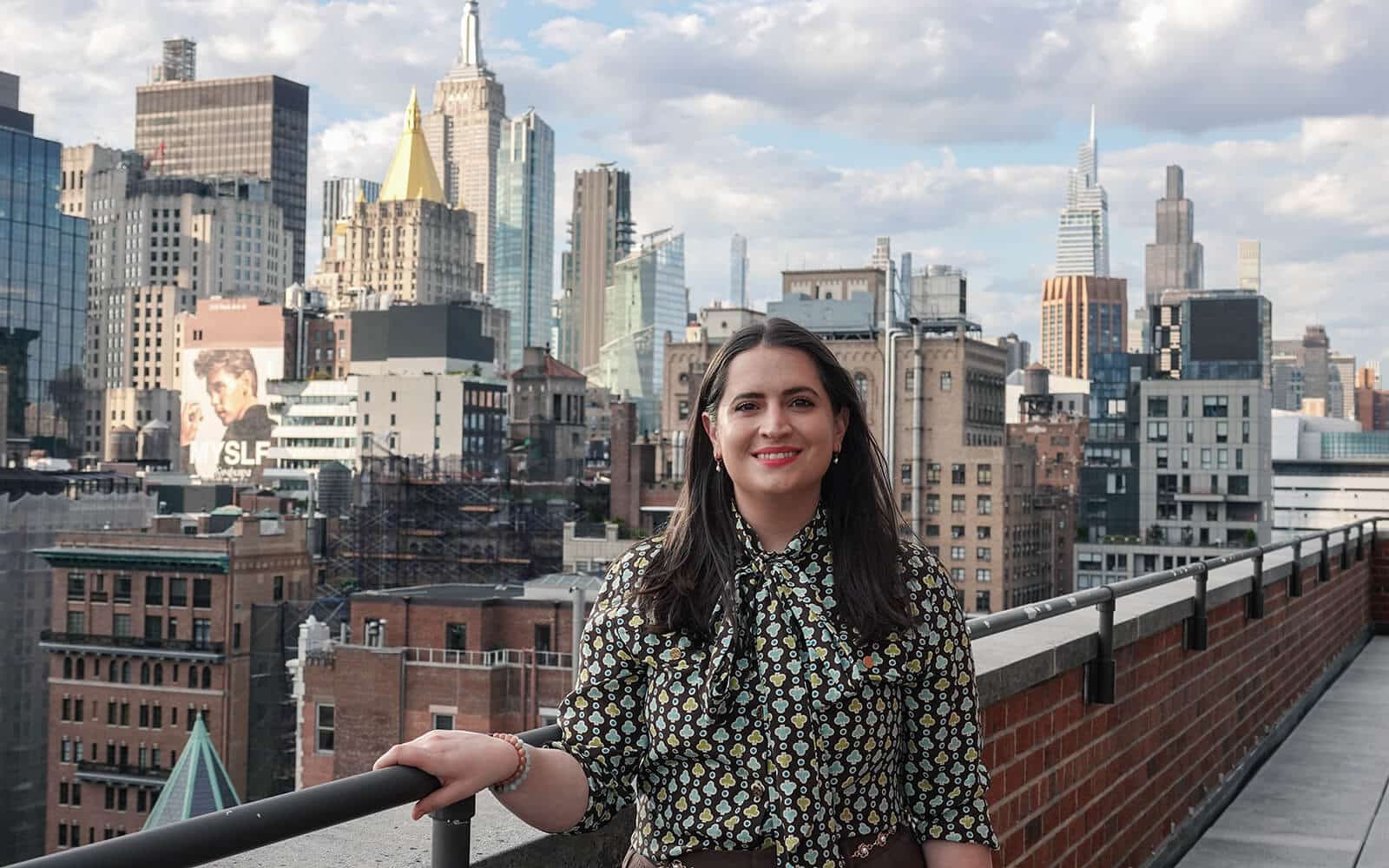
Also at Wellesley College, Zaldívar-Giuffredi created her own double-major in Romance Languages and Political Science and studied abroad in Aix-en-Provence, France. During the summers, she explored politics through a Congressional internship, before pivoting to law through an internship with HBO Latin American Group’s legal department. There, her knack for languages and cultural fluency came in especially handy. Inspired and prepared by these experiences, Zaldívar-Giuffredi would go on to earn her JD at Washington University and a Master of Laws/Master 2 from the Université of Paris I: Panthéon-Sorbonne, as part of a dual-degree program.
After earning her law degree, she went on to represent major tech and social media clients, including Meta, while working as an Associate at the law firm, White & Case LLP. Working at White & Case, Zaldívar-Giuffredi gained experience in commercial litigation, international arbitration, and principally international technology disputes involving issues such as data privacy, consumer protection, contractual obligations, platform enforcement, fundamental rights, and intermediary liability. Her experience working with teams worldwide across many different offices and time zones, taught Zaldívar-Giuffredi how to think like and truly be a global player.
In joining The Walt Disney Company’s Privacy Legal Team, housed under the Company’s Global Public Policy team, Zaldívar-Giuffredi found her match. With business all over the world, from theme parks to streaming, it is valuable for Disney attorneys to be attuned to the evolving landscape and appreciate a variety of cultures. Zaldívar-Giuffredi’s background positions her uniquely for her work at Disney, where being cognizant of laws and regulations across several regions is a positive attribute.
Zaldívar-Giuffredi started with focuses in the EMEA and LATAM regions, but she recently transitioned to working with US-based teams, while continuing her work with the LATAM teams. She notes that, “Even though I now work in the US landscape—and it is my first time in five years going back to practicing US law—the mindset when negotiating and preparing agreements or advising the business on how to craft and deploy a particular service or tool must always be global, with an eye towards the project’s potential and likely expansion to other regions.”
Zaldívar-Giuffredi also serves as President-Elect and a Board Member of the Hispanic National Bar Foundation (HNBF), a non-profit foundation focused on strengthening the education pipeline for Latino students who wish to become attorneys. Every year, she helps organize a week-long summer program in Washington, DC, where high school students from across the US, all aspiring to be attorneys, participate in a mock trial, meet and hear from Latino practicing attorneys and judges, and witness, many for the first time, people of their same background in the legal profession.
“Visibility matters. Supporting each other matters,” Zaldívar-Giuffredi says. “Latinos make up a very small fraction of practicing attorneys in the US, and Latinas, in particular, make up only about 3 percent. I’m committed to increasing that number.”
It’s not Zaldívar-Giuffredi’s first time in a place of service. While at White & Case, she was a two-time winner of the Firm’s pro bono awards for work on behalf of individuals and communities in need. This kind of work, Zaldívar-Giuffredi says, is her way of honoring the sacrifice that multiple generations of her family made for their descendants and part of the philosophy her parents instilled in her: “Lawyers are in the service profession.”
“My grandparents fled Cuba in the middle of a revolution, and my grandfather sold newspapers on the streets of Caracas for three years, before someone was willing to recognize his law degree and allow him to practice,” Zaldívar-Giuffredi says. “My parents came to the US, leaving behind another country headed towards revolution, and made new lives for themselves professionally and personally. Comparatively, I’ve had it very easy. With that in mind, I want to improve the lives of those who haven’t had the same opportunities. I’m determined to create change for the next generation, like my family generously and courageously did for me.”