

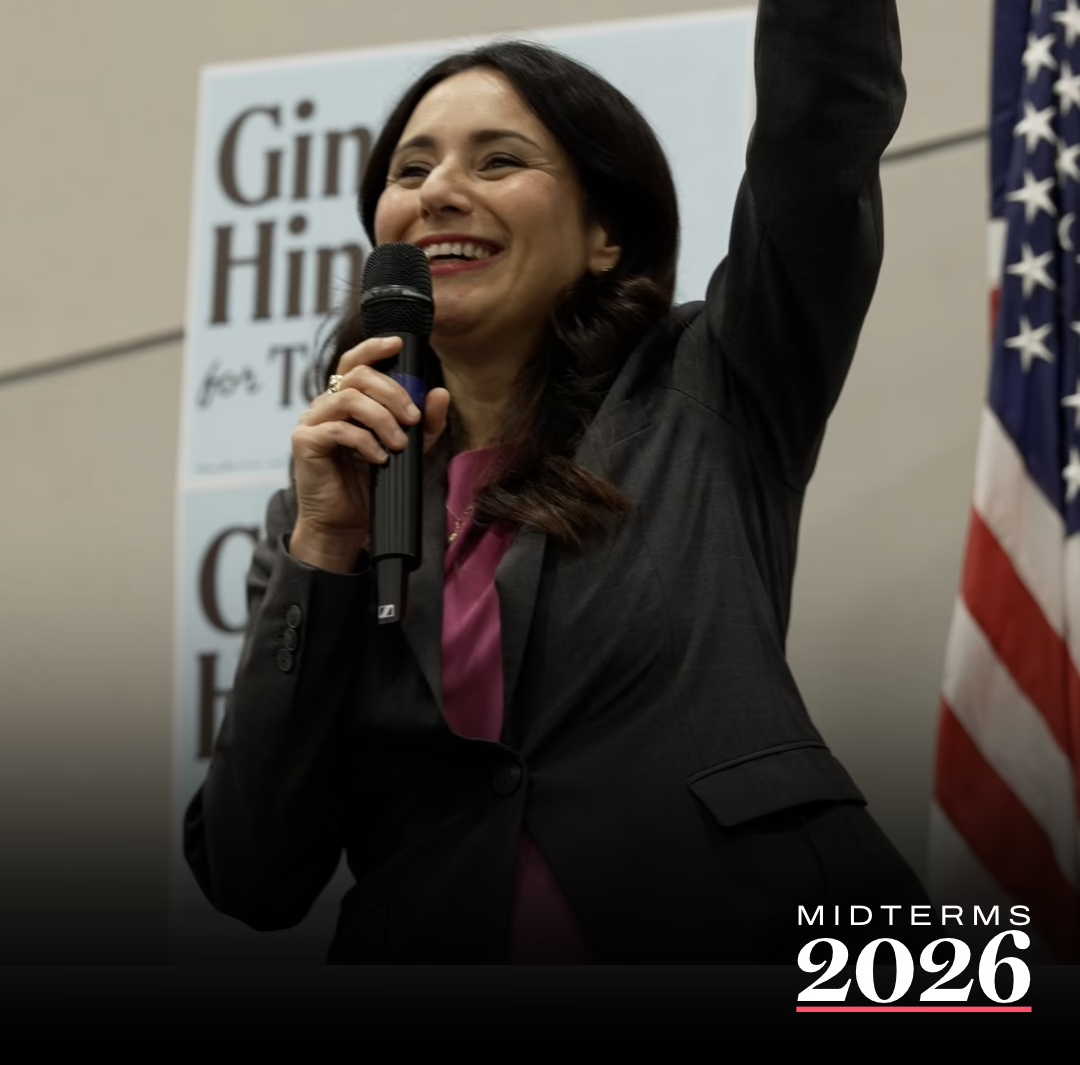

Before Gina Hinojosa won the race for governor of Texas, a question about her son’s elementary school pushed her toward public office: who gets to decide what happens to a community’s institutions?
Pease Elementary, a historic school in downtown Austin, had appeared among proposed campus closures. For Hinojosa, the prospect made school governance personal. Years later, explaining her decision to seek a school board seat, she recalled: “I got angry and decided to run.”
Her path from that dispute to the governor’s office offers a perspective on leadership grounded in the distance between opposing a decision and becoming responsible for making one.
A Parent With Professional Experience
Hinojosa brought more than parental concern to her first campaign. A graduate of the University of Texas and George Washington University’s law school, she had worked as a civil rights and labor lawyer. In a 2022 interview with Austin Community College’s ACCENT, she described representing employees in discrimination cases.
She also had political connections. Her father, Gilberto Hinojosa, chaired the Texas Democratic Party when she sought office in 2012. Contemporary KUT reporting documented endorsements from established Austin politicians. Her candidacy combined a personal cause with professional experience and access to an existing political network.
That first campaign extended beyond Pease. Hinojosa questioned changes championed by then-Superintendent Meria Carstarphen, including bringing a charter operator into Allan Elementary. She argued that the affected community’s wishes should matter in decisions about its school.
Learning to Govern
Voters elected Hinojosa to Austin ISD’s at-large Position 8 in November 2012. That month, her fellow trustees chose her as vice president. In January 2015, they elected her president.
The roles put her inside the institution she had sought to influence, where protecting schools meant confronting questions about compensation, revenue, and competing needs.
In 2014, the board approved the equivalent of a 2 percent salary increase for teachers and staff while maintaining an earlier adjustment. The district warned that continuing those increases depended on identifying a permanent revenue source. The decision reflected a challenge familiar to organizational leaders: how to support employees while sustaining the institution that employs them.
These were collective board decisions, but they offer context for the experience she carried forward.
In December 2015, Hinojosa stepped down as president while campaigning for the Texas House. She remained a trustee.
Taking the Fight to the Statehouse
Entering her first legislative session in January 2017, Hinojosa identified school financing and local control as priorities. She also acknowledged a practical constraint: Democrats lacked the numbers to prevail alone, making community advocacy and organizing essential.
A later education battle demonstrated how that approach could operate. During the 2023 fight over private school vouchers, Democratic caucus leaders tapped Hinojosa and James Talarico, now Texas’s US senator-elect, to help lead their opposition.
As The Texas Tribune reconstructed the negotiations, Democrats deliberately gave rural Republicans room to lead the debate against vouchers. Maintaining the coalition required attention to what potential allies could withstand politically. The strategy helped block the proposal that year, although vouchers became law in 2025.
The School Beyond the Origin Story
Pease’s later history complicates a straightforward account of a school saved.
The closure proposal that helped motivate Hinojosa predated her election. Pease remained open during her board tenure, but Austin ISD closed it as an elementary school after the 2019–2020 academic year, years after she left.
In January 2025, trustees authorized negotiations with United Way for Greater Austin to repurpose the property as an early childhood education center.
That history leaves a consequential question for Texas’s governor-elect: how can institutions preserve the opportunities communities value when the financial and political conditions around them change?
Hinojosa’s new position gives her greater influence over the state policies she once confronted locally. It also brings greater responsibility for the choices, compromises, and results that follow.

