
In 2013, legendary executive coach, Marshall Goldmsmith, wrote the book “What Got You Here Won’t Get You There.” In it, Goldsmith argues that the behaviors that made you successful earlier in your career will often limit or derail you at higher levels of leadership.
For many leaders in corporate environments, promotion into the executive ranks is major career goal. They spend years learning their craft, building credibility, and delivering results. They pay their dues and earn the privilege of a bigger role, expanded responsibilities, and the compensation to match.
Then they get there, only to realize something few people talk about: The expectations on performance at the executive level have changed in ways for which they were not fully prepared. That is because the executive role itself requires fundamentally different way of leading.
When What Made You Successful Starts to Work Against You
Most leaders are promoted because they are strong operators and perform well in their current role. They know how to execute. They know how to solve problems. They are trusted to deliver results under existing responsibilities.
Those strengths still matter when you get promoted. They do not go away. They are good, but insufficient at the executive level. And as Goldsmith warns, they can limit your effectiveness if you continue to overuse them.
I have seen this firsthand, both in my time as a human resources executive at Walmart and in my executive coaching practice. “Leaders get promoted to their next level of incompetence,” we used to say. These leaders stepped into broader roles and instinctively stayed close to their previous work and failed to either let go or develop new skills that would make them successful as new enterprise leaders. They believed, mistakenly, that the strengths they demonstrated in their previous role were the key to making them successful again in their new higher positions. They felt comfortable being the doers and liked the recognition they received from their leadership. That pull was difficult to ignore and harder to reject.
But at the executive level, staying too close to execution creates an unintended consequence. You become the constraint to the enterprise strategy instead of the catalyst.
The Shift: From Driving Results to Designing Enterprise Leadership Success
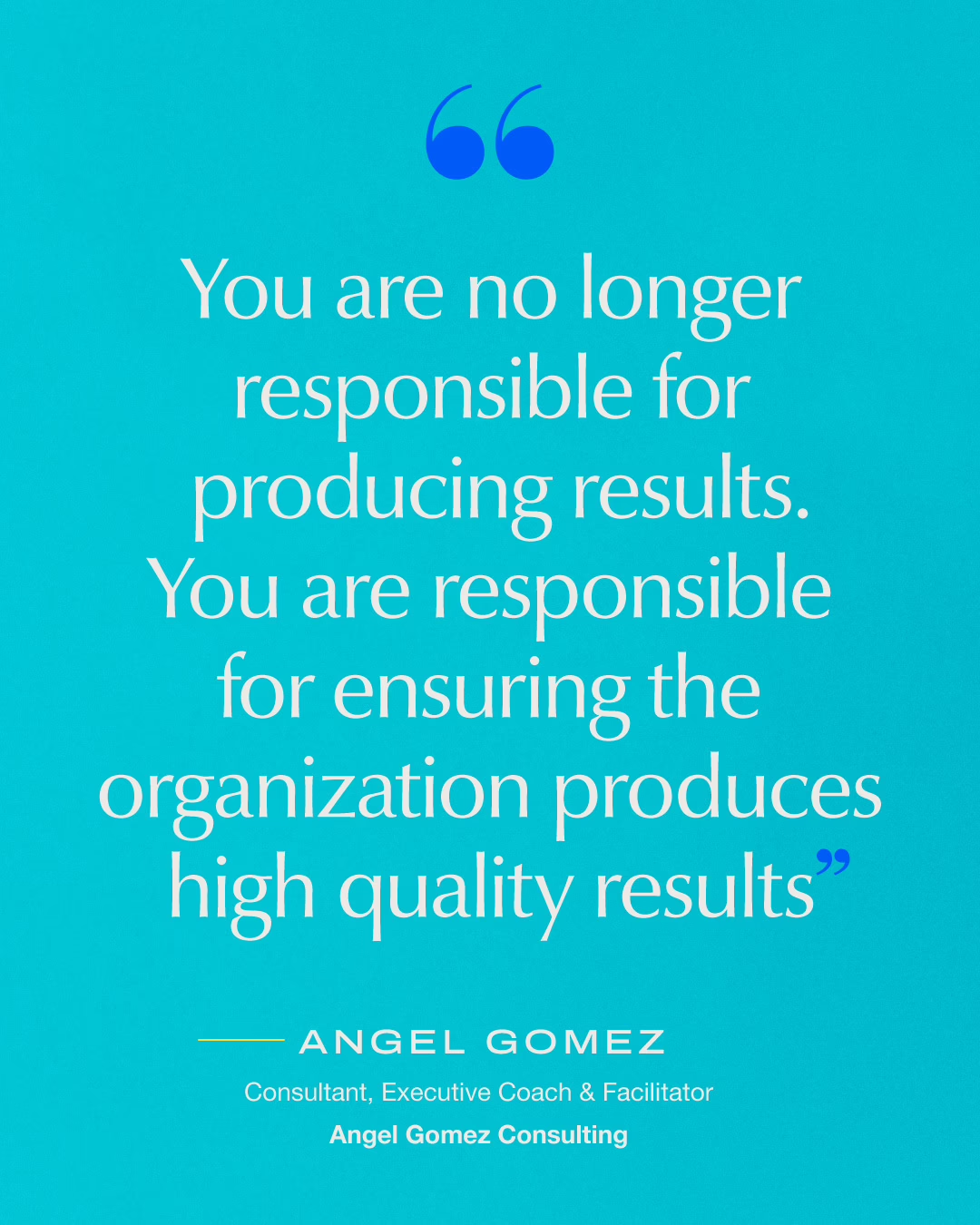
The most important transition at the executive level is this: You are no longer responsible for producing results. You are responsible for ensuring the organization produces high quality results.

You are also responsible for ensuring the organization produces these high-quality results in an effective and efficient manner, through clear, replicable, and appropriate processes. That is, how the results are achieved is just as important as achieving the results.
Lastly, you are also responsible for cultivating a work culture of collaboration, positive interactions, engagement, and trust. A place where you develop and recognize managers, directors, and other executives with whom, and for which, others want to work.
Your effectiveness as an executive leader depends on your ability to align and balance these three priorities. No longer is the achievement of goals sufficient to be considered a good leader at the executive level. Successful executives balance the achievement of business goals with the necessity for effective and efficient processes and while fostering positive working relationships to accelerate overall enterprise success.
Final Thoughts
The executive level is not just a reward for past performance. It is a different role, with different expectations. It is results, plus process, plus people.
The leaders who make this transition successfully are the ones who recognize that early, adjust their mindset accordingly, balance new priorities, and strategically develop the new skills necessary for enterprise level success.